2025 Investigative Case Management Benchmark Report

Executive Summary
Case IQ, in partnership with Dr. René Arseneault from the University of Laval, conducted a comprehensive benchmarking study on workplace investigations and case management. The research examined practices, processes, tools, and outcomes from the initial report of an incident through to resolution. The findings provide investigators and case managers within HR, fraud, ethics and compliance teams with critical insights to benchmark their approaches against industry trends, compare with similar organizations, and identify opportunities to improve efficiency and investigative outcomes. This report sheds light on the effectiveness of intake channels, case volumes and assignment, common actions taken after investigations, the adoption of artificial intelligence (AI), among other factors.
By examining practices, resources, case outcomes, and technology adoption across five key areas and drawing on insights from highly experienced respondents, teams can identify and apply actionable insights for improvement, implementing strategies that enhance efficiency, effectiveness, and fairness in investigations.
Approach & Methodology
The study surveyed over 500+ North American professionals in HR, ethics and compliance, and fraud investigation roles and use cases. Participants came from a broad range of industries, including government, education, finance, and more. By collaborating with a third-party researcher, Case IQ ensured data collection, analysis, and reporting were methodologically sound and unbiased, with balanced methodologies applied to provide strong representation across all key areas.
To ensure the reliability of the benchmarking results, respondents were screened to meet specific criteria, including:
- Location: Based in the United States or Canada.
- Role: Responsible for case reporting, investigation, or case management in at least one relevant area, such as HR/employee relations, accommodations, inquiries, ethics and compliance, or fraud investigations.
- Experience: Familiar with the process of reporting and investigating cases (via a purchased solution or internal process) for at least one relevant use case.
- Industry: Representing a broad range of sectors, including aerospace, finance, government, education,and more.
- Organization size: Employed by organizations with 100+ employees, both globally and in North America.
- Assignment: Respondents who were able to provide insights on multiple use cases were assigned to the one where they could offer the most comprehensive input.
Intake Methods & Effectiveness
Organizations continue to rely primarily on traditional intake methods like email, web portals, and direct contact, while steadily expanding toward digital and AI-enabled channels such as mobile apps, chat, and chatbots. Overall effectiveness of intake methods is viewed as moderate to high, with digital tools seen as the most promising for improving accessibility and future performance. Although adoption of AI-driven intake is growing more slowly than expected, guided digital channels are consistently producing higher-quality, more complete reports, especially among larger organizations offering a wider mix of reporting options.
Intake Methods Offered
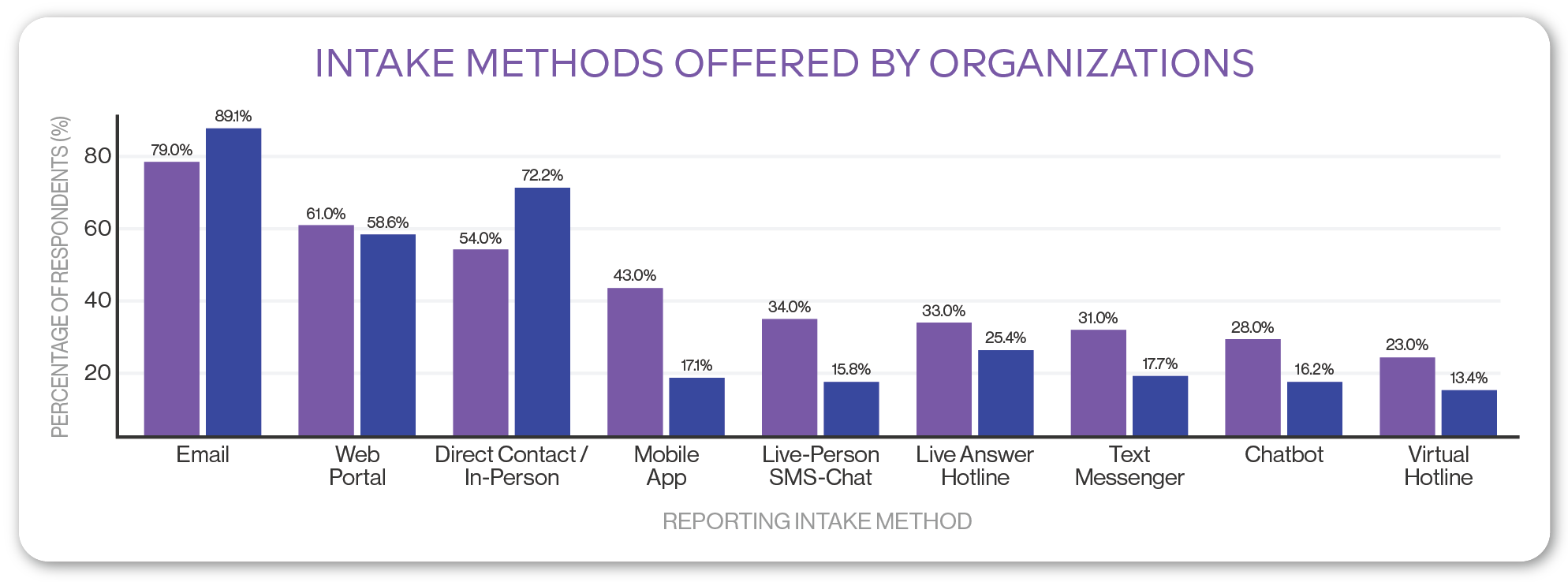
Email (79%), web portal (61%), and direct contact/in-person (54%) remain the most common intake methods, consistent with last year's results. In contrast, mobile app (43%), live-person SMS chat (34%), and chatbot (28%) saw the strongest growth from 2024 (up from 17%, 16%, and 16%, respectively), reflecting a move toward mobile-first and automated tools. Virtual hotlines (23%) also increased from 13%, showing rising interest in voice-enabled and digital intake solutions. Overall, organizations are modernizing case intake by investing in AI-driven and mobile technologies to improve accessibility and reporting efficiency.
Effectiveness of Intake Methods
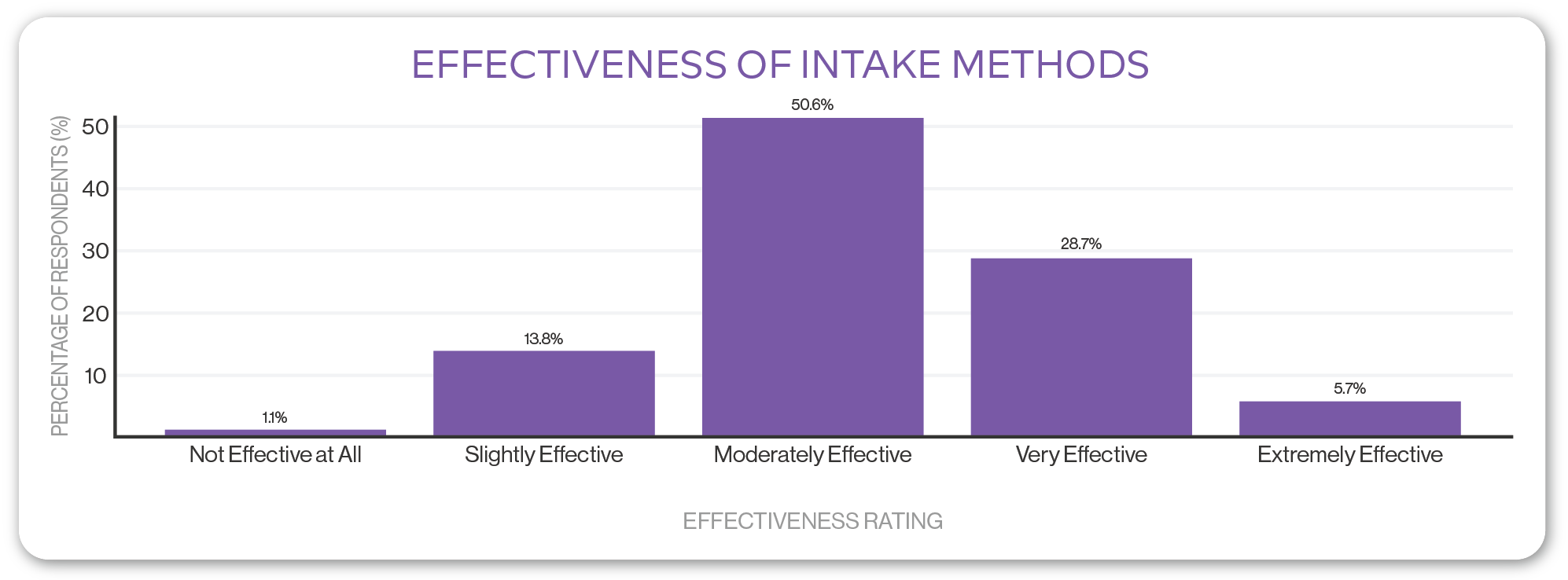
Most organizations view their intake methods as effective, with 79.3% of respondents rating them as either moderately (50.6%) or very effective (28.7%). Only a small share (14.9%) reported their intake as not or slightly effective, while 5.7% rated them as extremely effective. Overall, these findings indicate a high level of confidence in current reporting processes.
Leveraging AI for Intake
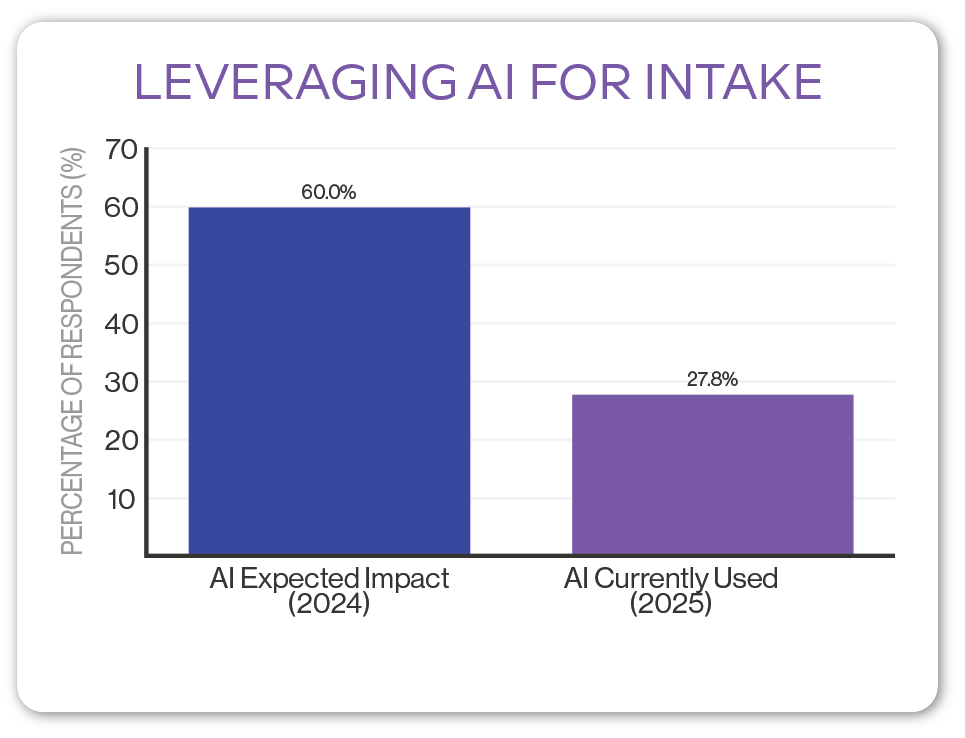
In last year’s report, 60% of organizations identified incident intake as the area where AI would have the most impact, showing high expectations for digital transformation. Yet, this year’s data reveals that only 27.8% have begun implementation AI across their intake process. This disconnect between AI’s perceived potential, and its practical adoption illustrates that many organizations are still in the early stages of operationalizing advanced technologies.
Case Volume & Reporting
Most organizations handle relatively low to moderate case volumes, with high-volume reporting remaining uncommon. The majority of reports are non-anonymous, and organizations are generally investigating a substantial portion of the cases they receive. Overall, investigative workloads appear manageable, with most investigators carrying relatively light caseloads rather than being overextended.
Case Volume
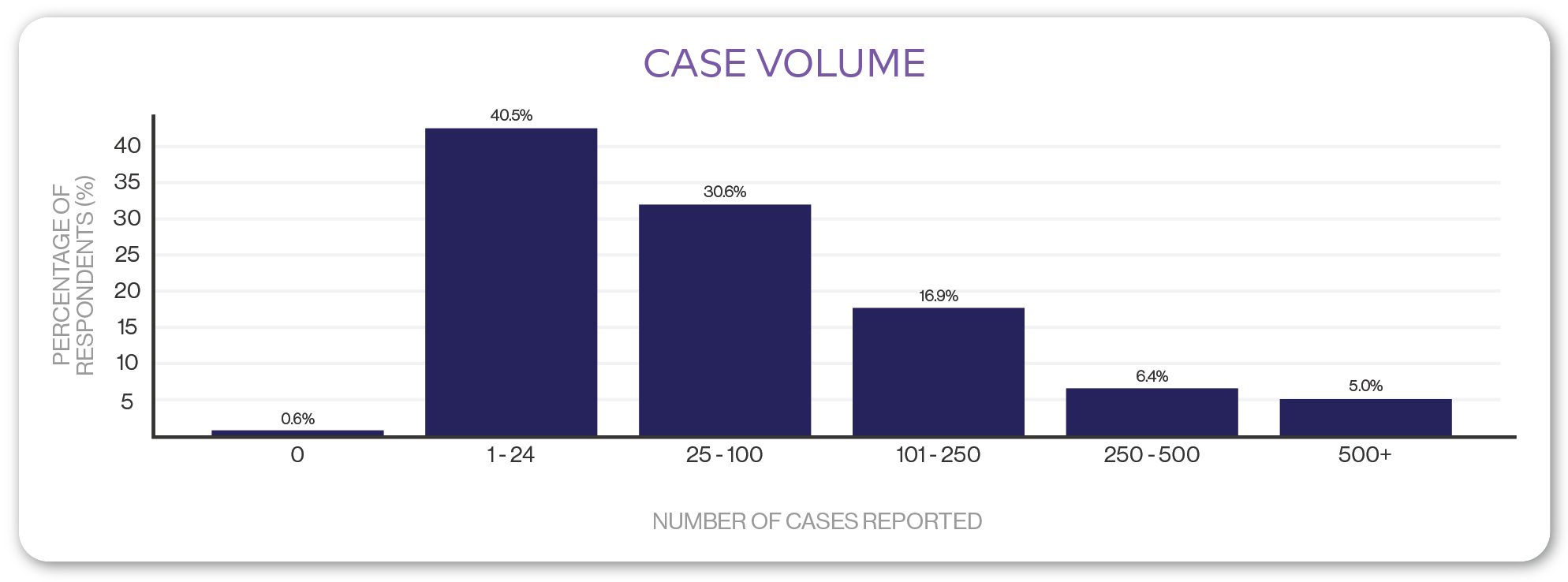
40.5% of organizations reported 1–24 cases and 30.6% reported 25–100 cases, in combination over 70% handled fewer than 100 cases during the year. Another 16.9% managed 101–250 cases, while 11.4% reported more than 250, showing that high case volumes remain uncommon. Only 0.6% reported zero cases, showing that organizations experienced some level of reporting activity.
Percentage of Cases Investigated
65.2% report that at least half of all cases were investigated, and nearly one in three (31.7%) said that more than 90% were pursued. However, 29.5% investigate only half or fewer of their cases. While investigations are prioritized, some organizations still face challenges in ensuring that all reported cases receive adequate follow-up.

Investigator Caseloads
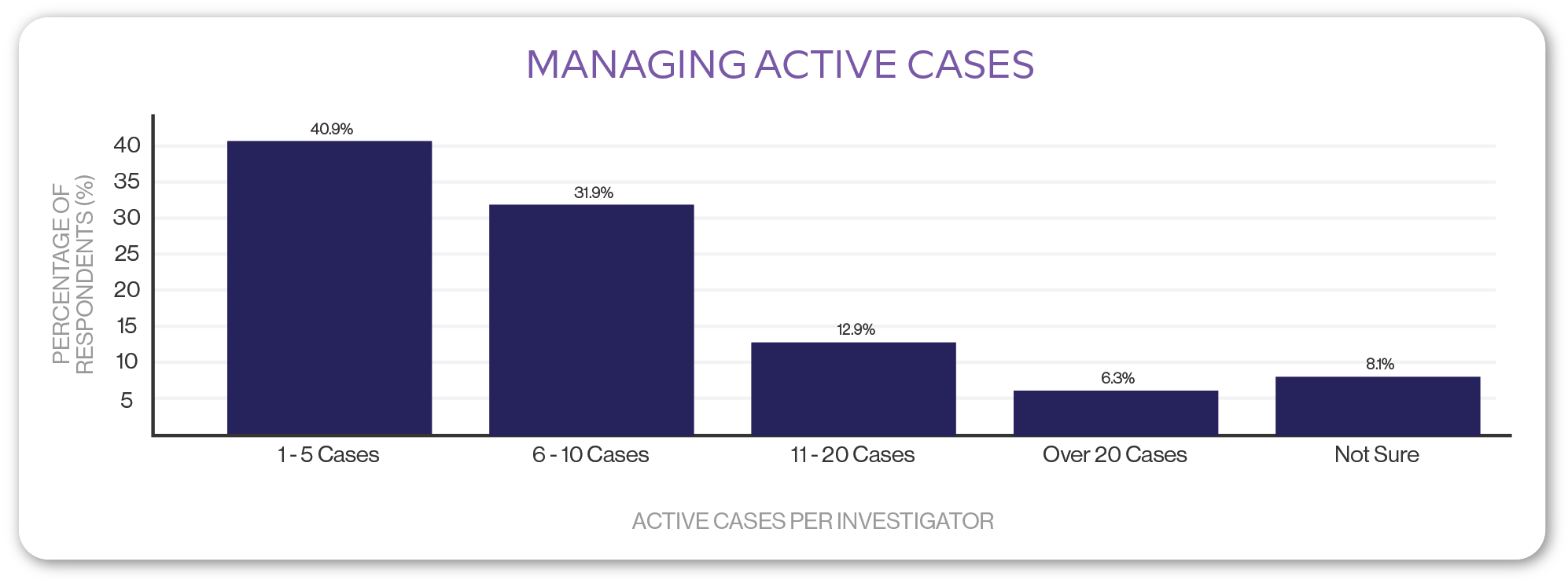
The majority of investigators manage light to moderate caseloads, with 40.9% handling 1–5 cases and 31.9% managing 6–10 cases at a time. Only 19.2% oversee more than 10 active cases, and heavy caseload are relatively rare across most organizations. These findings reveal that investigative resources are generally well-distributed; however, a small segment of organizations may face capacity challenges due to investigators managing high case volumes.
Managing Investigations & Cases
Organizations most often rely on collaborative investigation models that blend dedicated investigators with cross-team support. Case assignments are typically driven by expertise, severity, and subject matter rather than ad hoc processes. While training is generally consistent and ongoing, evidence collection and limited resources remain the most significant obstacles to timely investigations.
Who Investigates Cases?
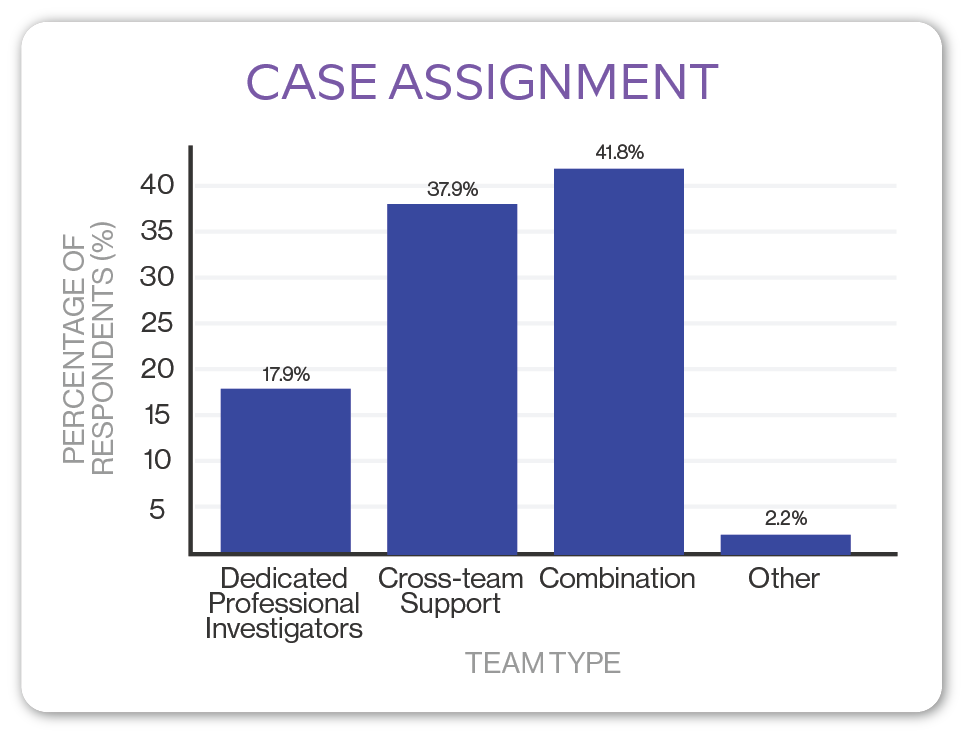
A hybrid approach to investigations is the most common, with 41.8% of organizations combining dedicated investigators and cross-team support. Another 37.9% rely solely on cross-team collaboration, while only 17.9% have dedicated professional investigators. This trend shows that shared responsibility and flexible resource models is the primary strategy to help adapt to fluctuating case volumes and complexity levels.
How Cases are Assigned
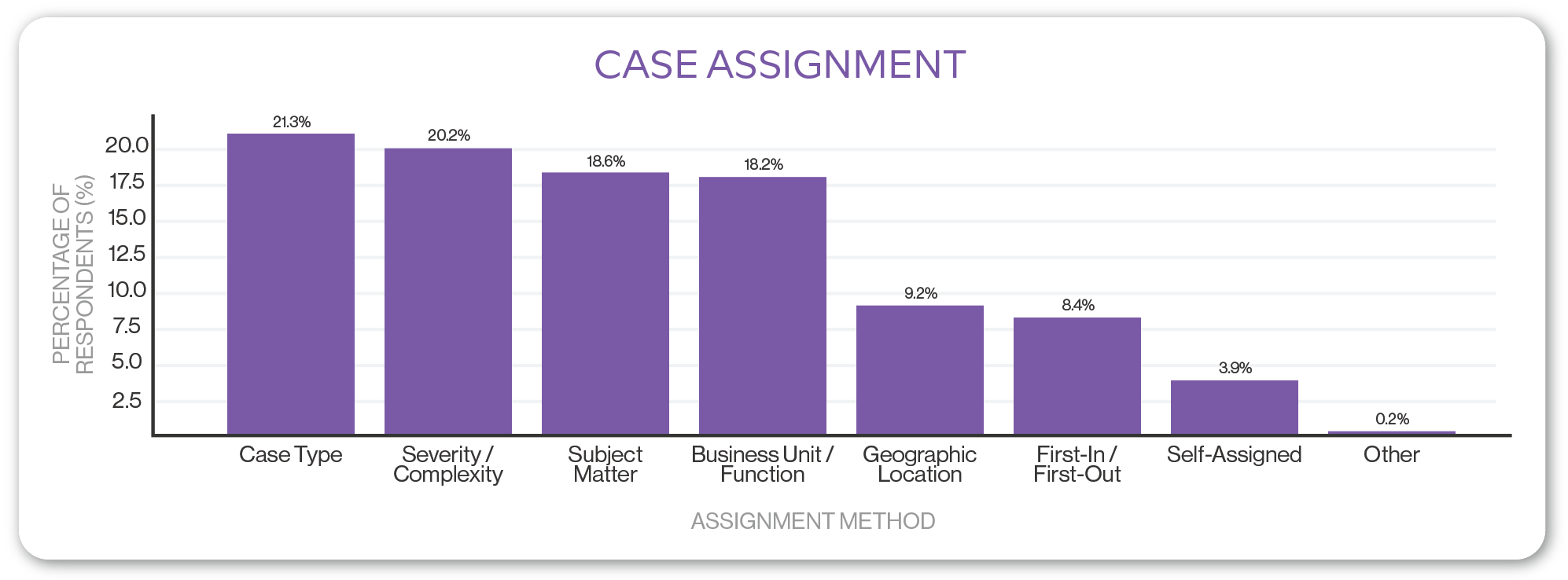
The most common factors on case assignment are based on case type (21.3%), severity or complexity (20.2%), and subject matter (18.6%), indicating a strong emphasis on ensuring the right expertise handles each investigation. Business unit or function (18.2%) also plays a significant role, reflecting alignment between investigations and organizational structure. In contrast, geographic location (9.2%), first-in/first-out (8.4%), and self-assignment (3.9%) are less frequently used.
Investigative Bottlenecks
Evidence gathering (39.8%) emerged as the leading investigation bottleneck, followed by resource limitations (20.1%) and manual processes (12.9%) that reveals that ongoing operational and data management challenges. While technology and process automation have improved in recent years, these findings reveal that investigation teams still face efficiency gaps, particularly in data collection and resource allocation, that hinder timely case resolution and thoroughness.

Investigative Outcomes
Substantiation rates have remained steady year over year, with organizations confirming a meaningful but consistent portion of reported cases. The most common outcomes emphasize corrective and educational responses (iincluding warnings, training, and disciplinary action), reflecting a balanced approach to accountability. More severe actions like termination or legal measures are used sparingly and reserved for the most serious cases.
Substantiation Rates
Nearly half of organizations (47.7%) reported substantiating 26–75% of cases. The majority operate within a moderate range, with very high or very low substantiation levels remaining rare. This year’s results are flat with last year’s benchmark, where the substantiate rate was 40%.

Most and Least Common Outcomes
The largest portion of organizations (27.8%) said that 60–79% of substantiated cases resulted in a warning, which is the most common corrective outcome.

Demotion remained a rare consequence, with nearly seven in ten organizations (69.1%) applying it in less than 20% of substantiated cases. Overall, demotion is reserved for the most serious or persistent infractions, with a preference for other corrective actions such as warnings, training, or termination before implementing this measure.

The Adoption of Artificial Intelligence (AI)
AI use in investigations remains limited today, but interest and planned adoption are rising as organizations grow more confident in its value. AI is increasingly viewed as most impactful for case management, analytics, and reporting rather than initial intake. At the same time, organizations are taking a governance-first approach, prioritizing policy updates and privacy safeguards as adoption accelerates.
AI Adoption Rate in Investigations

AI adoption in investigations remained low, with 63% of organizations reporting no current use of AI in their case management processes. Around 27.8% are currently leveraging AI tools, often in areas like reporting intake, case management, or analytics, while 9% were unsure. These results show that that AI integration is still in its early stages.
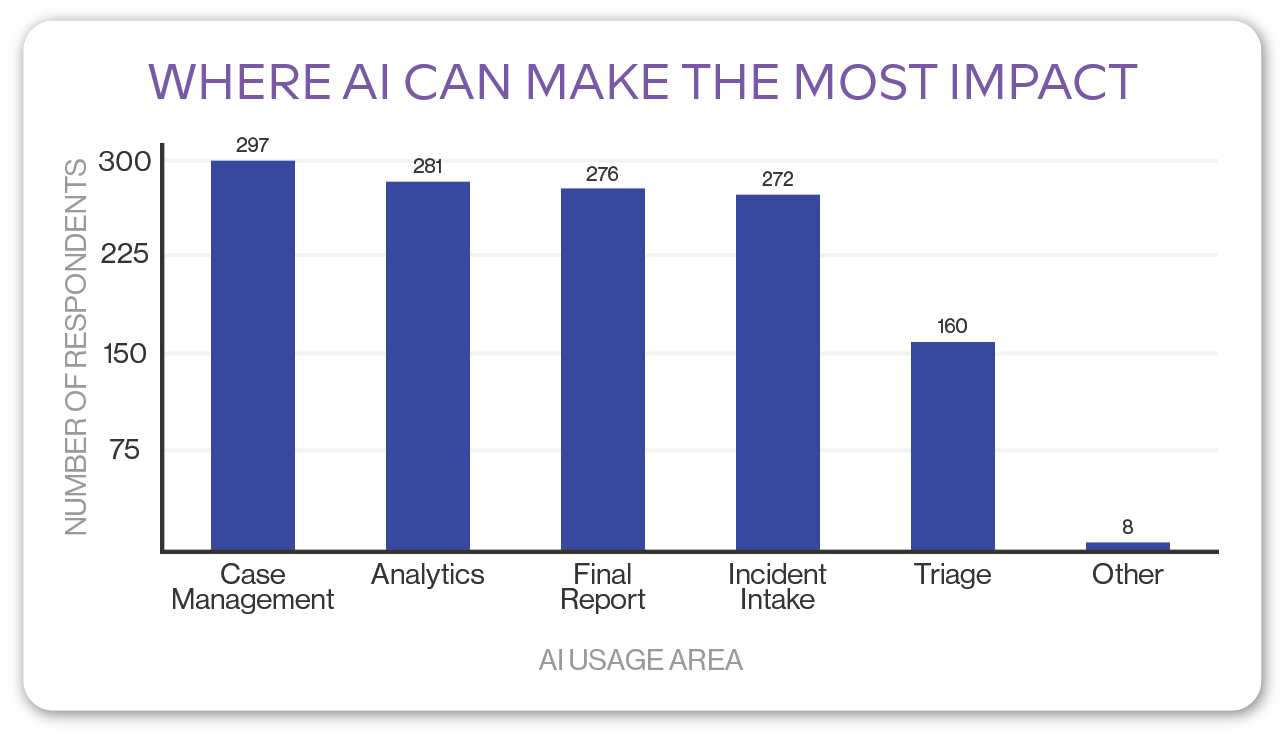
Where AI Can Make the Most Impact
Respondents view AI as a powerful tool across the entire case lifecycle, with the greatest impact on case management, analytics, final reporting, and incident intake, and the least on triage. The findings align with lastyear’s benchmark, showing growing confidence in AI’s ability to manage and analyze cases, while perceptions of incident intake remain steady. Although adoption is still developing, organizations are becoming more strategic in applying AI, focusing on areas where it can drive measurable efficiency and deeper insights.
Organizations' Approach to AI
AI governance and policy development took center stage, with 58.2% of organizations updating their processes to prepare for broader adoption of AI. Fewer organizations (14.7%) have directly invested in AI technology, indicating that most are still laying the groundwork for responsible integration. Meanwhile, 26.9% made no AI-related changes, suggesting that AI maturity remains uneven across industries, with many organizations still in the early planning and evaluation stages. These results are not surprising, as last year’s benchmark also showed that privacy concerns (44%) were the top barrier to AI adoption, a factor that continues to drive organizations toward a governance-first approach to implementation.

To read our full findings and implications, read the report.

About the Researcher
Dr. Rene Arseneault is an assistant professor of human resources at the University of Laval. His research focuses include recruitment and selection, personality, job design, and cross-cultural differences in the workplace. He has published over a dozen academic, peer-reviewed articles and presented his work at top-tier conferences worldwide.
.avif)