Case IQ Research Study: AI and Whistleblowing: Through the Employee Lens (Brazil)
Study Overview
The primary objective of this study was to examine employee perceptions and experiences related to whistleblowing across five countries: the USA, Canada, Australia, France, and Brazil. This report focuses on Brazil. The research aimed to assess how comfortable employees feel in reporting misconduct, their confidence in the organization’s protection against retaliation, and the perceived effectiveness of whistleblowing programs. Additionally, the study explored the role of organizational culture and leadership in fostering ethical behavior and evaluated attitudes toward the use of AI-driven whistleblowing tools. By comparing responses across diverse cultural and organizational contexts, the study sought to identify key factors that influence whistleblowing behavior and inform best practices for creating safer, more transparent reporting environments globally.
This was a cross-national quantitative survey conducted across five countries: the USA, Canada, Australia, France, and Brazil. Total Respondents: Approximately 1,090 participants. Country Samples: Each country had a sample size ranging from 210 to 226 respondents. Collected demographics included gender, age, job tenure, customer-facing role (desk-based vs. deskless), and ethnicity (in country-specific files). The survey included both frequency-based and scale-based questions, with responses to scale-based questions measured on Likert-type scales (typically 1–5). Openended (qualitative) responses were also recorded. ANOVA (Analysis of Variance) was used to compare means across countries for key variables. Data were collected through online recruitment platforms (i.e., via online survey platforms) with standardized questions across all countries to ensure comparability.
Workplace Incidents & Reporting
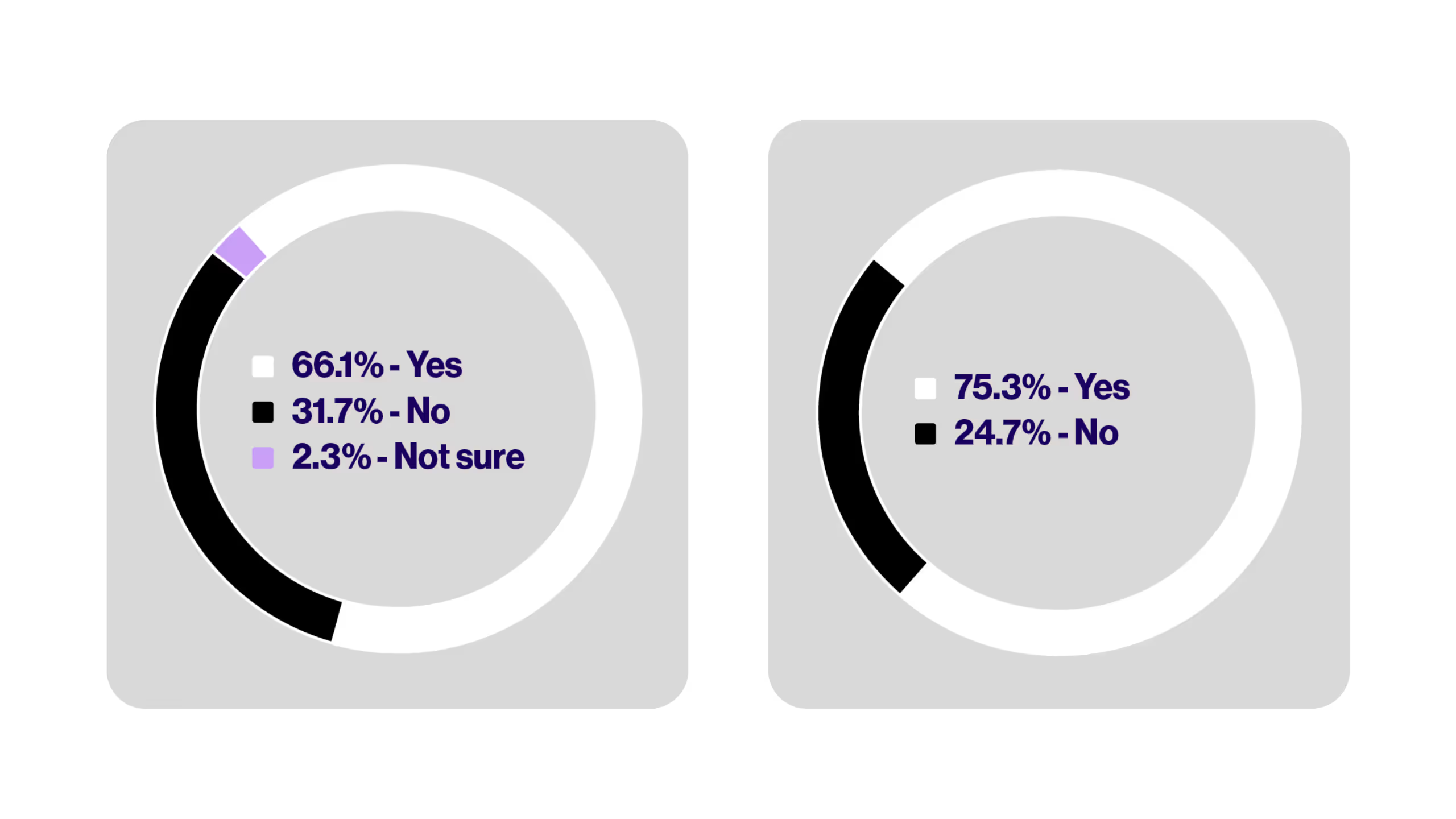
Misconduct is widely visible in Brazilian workplaces. 66.1% of Brazilian employees reported witnessing unethical or illegal behavior at work. Among those who witnessed misconduct, 75.3% reported it, while 24.7% did not. This is a very strong reporting rate, higher than in Canada, Australia, France, and the U.S. Despite challenges, there appears to be a strong inclination toward accountability and action when issues are observed. Employers should take note because employees are alert and aware and will expect the appropriate action to be taken. If it is not, organizational risk increases. Employers can capitalize on this pro-reporting culture with systems that protect and empower employees further.
Whistleblowing Programs & Company Culture
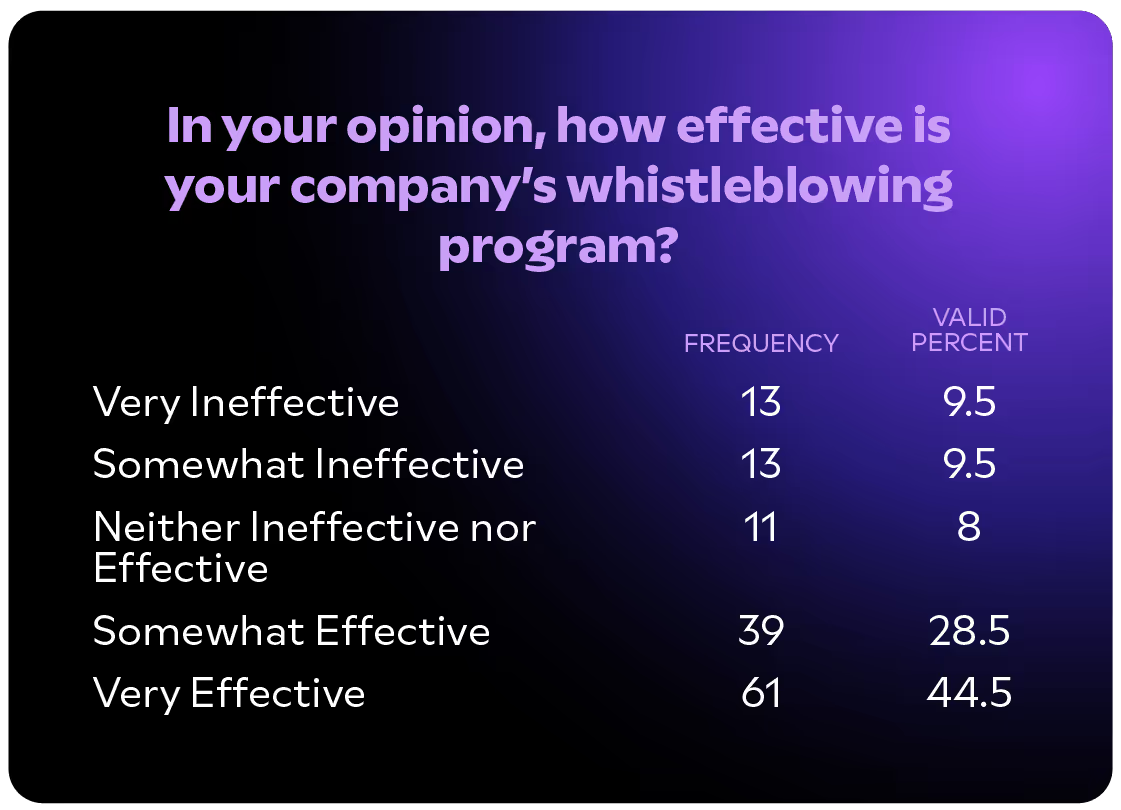
As mentioned previously, 62% of Brazilian employees reported their organization had a whistleblowing program, and 73% stated that the program is effective. This is among the strongest scores among countries surveyed, along with the US.
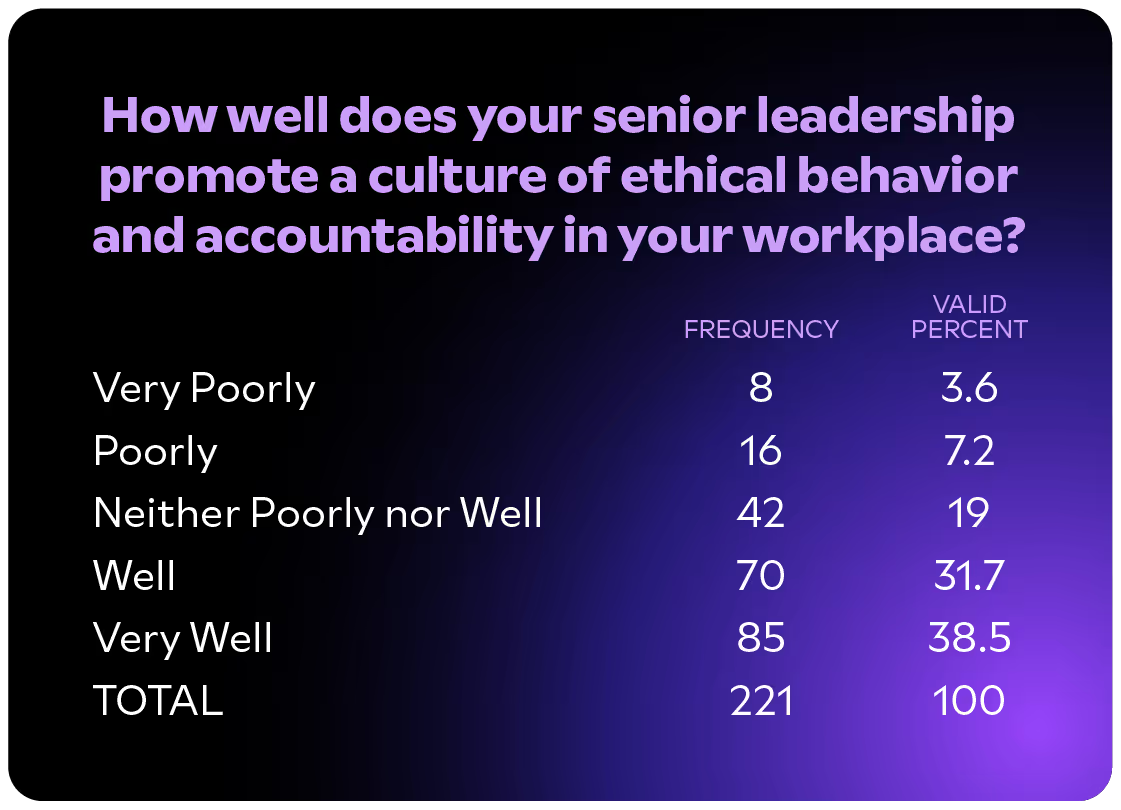
A robust 70.2% of respondents believe leadership promotes ethical behavior well or very well. The high positive perception of leadership aligns with the relatively high ratings of whistleblowing effectiveness, suggesting a broader trust in internal governance and tone from the top.
Artificial Intelligence
Brazilian respondents demonstrate high trust in AI. A majority (75%) of Brazilian employees do not express concerns about AI being used in whistleblowing tools. Despite this trust, a vast majority (81%) still want companies to disclose how AI is used in the process. This highlights an important distinction: lack of concern ≠ willingness to be uninformed. These results indicate that Brazilian employees are receptive to AI in compliance settings, but they expect transparency and accountability from their employers. One way to address this concern is to make it a standard practice to disclose where, how, and why AI is used in the reporting process (e.g., for intake, triage, trend detection). This could be through onboarding materials, internal compliance training, or dedicated transparency statements.
Employees are favorable towards AI; however, an overwhelming majority demand AI transparency. 83% of U.S. employees believe companies should be required to explain how AI is used in whistleblowing tools. Put another way, employees don’t reject AI. They reject opacity. With an overwhelming majority of employees supporting mandatory AI disclosure, companies that withhold this information risk:
- Losing trust
- Triggering internal resistance
- Being viewed as ethically negligent
An overwhelming 83.7% of Brazilian employees believe AI can improve whistleblowing by making it safer and more confidential. This is the highest level of AI optimism across all countries surveyed —significantly higher than Canada (27.1%), Australia (50.0%), or France (42.4%). The strong support for AI may reflect broader Brazilian openness to digital transformation, especially in contexts where it can reduce human bias or risk of retaliation.

To read our full findings and recommendations, read the report.

About the Author
Shannon Walker is the Founder and President of WhistleBlower Security Inc. and
the Executive VP of Strategy at Case IQ. WBS was founded in 2005 and acquired by
Case IQ in 2023 after years of partnering on global intake solutions for mutual clients.
Shannon is a thought leader on whistleblowing, ethics, corporate culture, and diversity
in the workplace. A former elected City Official, Shannon has also sat on numerous
non-profit and community boards and is currently on the BC Epilepsy Society Board.

About the Researcher
Dr. Rene Arseneault is an assistant professor of human resources at the University of Laval. His research focuses include recruitment and selection, personality, job design, and cross-cultural differences in the workplace. He has published over a dozen academic, peer-reviewed articles and presented his work at top-tier conferences worldwide.