Best Investigative Case Management Software for 2026
Investigative case management software helps organizations efficiently manage internal investigations through structured workflows, secure evidence handling, and compliance-focused reporting. This guide reviews investigation management software platforms for 2026, highlighting their key features and ideal use cases to assist compliance leaders, HR teams, corporate security professionals, and ethics officers in selecting the right solution.
Investigative Case Management Software for 2026
Detailed Vendor Overviews
Case IQ - Best Investigative Case Management Software for 2026
Case IQ offers a comprehensive investigative case management platform designed for enterprise workplace investigations. It supports the full case lifecycle from intake through resolution, featuring advanced analytics that help surface trends and actionable insights. The platform provides highly configurable workflows adaptable to various investigation types and integrates with major HRIS and ticketing systems. Its robust reporting tools assist teams in uncovering trends early for better risk prevention.
Key Features:
- Comprehensive case lifecycle management from intake to resolution
- Advanced analytics to surface trends and provide actionable insights
- Secure collaboration tools for HR, ethics, and compliance teams
- Highly configurable workflows adaptable to various investigation types
- Integration with major HRIS, ticketing, and single-sign-on systems
Ideal Use Case: Case IQ is ideal for enterprise organizations conducting complex workplace investigations across HR, compliance, and corporate security functions. Its advanced analytics and customizable workflows support high-volume investigation teams requiring detailed insights and seamless integration with existing systems.
AI Capabilities:
- Intelligent case triaging helps prioritize high-risk investigations
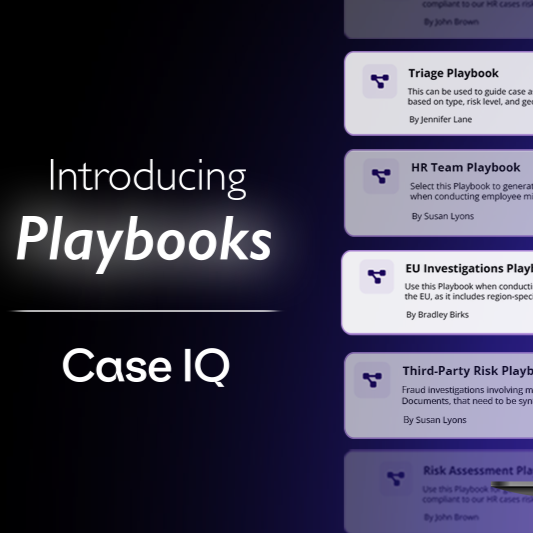
- Playbooks provide organization-wide guardrails for consistent AI use
- Clairia AI assistant streamlines tasks and offers investigators relevant insights and suggestions
What Customers Have to Say About Case IQ
What do you like best about Case IQ?
"I find Case IQ really helpful for keeping us on a timeline and remembering important steps during employee investigations. I also like having canned interview forms in the system as they are helpful. It's good for metrics afterwards as well. I appreciate the suggested links and having all of our employees loaded into the system." -Sarah H.
"It allows us to gather more information and provides a resource and portal for us to organize and see analytics on the cases that come through." -Ashley N.
"It’s helpful to have a single place to track all our cases, and it’s easy to customize fields to fit our unique needs." -Angela R., Lead, Labor & Employee Relations
HR Acuity
HR Acuity offers software for employee relations and workplace investigations with a structured “Plan, Investigate, Determine” process. The software provides defensible documentation. It is used by mid-market and enterprise HR teams managing high volumes of employee issues, offering integration with major HRIS platforms and customizable reporting.
Key Features:
- “Plan, Investigate, Determine” investigation methodology
- Defensible documentation
- Real-time compliance dashboards
- Integration with major HRIS platforms
- Customizable investigation templates and reporting
Ideal Use Case: HR Acuity is suited for mid-market and enterprise HR teams managing high volumes of employee relations cases and workplace investigations. It supports organizations focused on defensible outcomes and compliance monitoring.
AI Capabilities:
- AI-assisted compliance insights
- Risk scoring to identify high-risk cases
Considerations:
- Primarily focused on HR and employee relations investigations; may require integration with other platforms for broader investigation types
- Not well suited for organizations without established HRIS systems
AllVoices
AllVoices focuses on anonymous employee reporting and issue resolution. The platform enables employees to submit feedback and reports confidentially, supporting organizations in capturing workplace concerns. It integrates with HR workflows.
Key Features:
- Anonymous employee reporting and issue tracking
- Integration with HR workflows for timely investigations
- Configurable feedback forms and notification settings
- Support for capturing workplace concerns confidentially
Ideal Use Case: AllVoices is for organizations aiming to promote open communication and early issue detection through anonymous employee reporting. It supports HR and compliance teams in addressing employee concerns promptly.
AI Capabilities:
- Basic automated triage and categorization of reports
Considerations:
- Limited AI capabilities compared to other platforms
- Focused primarily on employee reporting rather than full case management
ServiceNow
ServiceNow delivers a scalable enterprise platform with workflow automation capabilities. It supports case management across IT, HR, legal, and security functions.
Key Features:
- Enterprise-wide workflow automation
- Case and incident management across IT, HR, legal, and security functions
- Extensive workflow customization and automation capabilities
- Integration with IT and business systems
Ideal Use Case: ServiceNow suits large enterprises requiring a scalable platform to streamline investigations alongside other business operations. It is for organizations seeking broad case and incident management with deep integration capabilities.
AI Capabilities:
- AI-driven workflow automation
- Predictive analytics to enhance investigation outcomes
Considerations:
- May require significant configuration and training for optimal use
- Designed for organizations with complex, cross-departmental workflows
NAVEX
NAVEX provides an ethics and compliance platform that includes incident reporting intake, policy management, and regulatory compliance features. It supports organizations in managing whistleblower reports and connecting investigations to broader compliance programs.
Key Features:
- Incident reporting intake and policy management
- Whistleblower support and regulatory compliance features
- Configurable workflows and approval processes
- Integration with broader compliance programs
Ideal Use Case: NAVEX is suited for mid-market to enterprise compliance teams focused on governance, risk management, and whistleblower program administration.
AI Capabilities:
- Automated incident categorization
- Trend analysis for compliance monitoring
Considerations:
- Primarily compliance-focused; may need additional tools for investigative case management
- Not for organizations that aren't emphasizing ethics and whistleblower programs
EQS
EQS offers secure whistleblower reporting and corporate compliance solutions. Its platform facilitates reporting, case management, and regulatory compliance tracking.
Key Features:
- Secure whistleblower reporting
- Case management and regulatory compliance tracking
- Customizable reporting and case workflows
Ideal Use Case: EQS is designed for organizations prioritizing strong whistleblower programs and adherence to evolving compliance requirements, particularly in regulated industries.
AI Capabilities:
- AI-powered report analysis
- Risk identification to prioritize cases
Considerations:
- Focus on whistleblower and compliance reporting may limit broader investigative functionality
- Only suitable for organizations with mature compliance programs
Resolver
Resolver provides integrated incident and investigation management software that centralizes incident tracking, risk assessment, and reporting. The platform supports organizations in managing workplace incidents and investigations while aligning with risk management objectives.
Key Features:
- Centralized incident tracking and risk assessment
- Integrated reporting and audit trails
- Flexible workflow configuration and role-based permissions
Ideal Use Case: Resolver is for organizations seeking a unified approach to risk and investigation management across workplace incidents and compliance functions.
AI Capabilities:
- AI-enabled risk scoring
- Pattern recognition to identify emerging risks
Considerations:
- May require customization to fit specific investigative workflows
- Only for organizations integrating risk and investigation management
See why Case IQ is the best choice for investigative case management software
Book a call today to see how Case IQ's secure, centralized platform can help you conduct more efficient, effective investigations.
Book a CallHow to Choose the Right Investigative Case Management Software
When selecting investigative case management software, consider the following factors:
- Investigation Types: Identify the primary types of investigations your organization handles, such as HR complaints, compliance violations, or security incidents, and choose platforms tailored to those needs.
- Workflow Customization: Look for solutions that offer configurable workflows and forms to match your investigation processes without extensive vendor support.
- Integration Capabilities: Ensure the software integrates smoothly with existing systems to enhance operational efficiency.
- Compliance and Security: Verify that the platform meets relevant regulatory requirements, and offers role-based access controls and audit trails.
- AI and Analytics: Evaluate the availability of AI-powered or automated features like smart case triage, pattern detection, and reporting dashboards to improve investigation outcomes.
- User Experience: Consider ease of use and training requirements to promote adoption among investigators and stakeholders.
The Importance of Centralized Data Management in Investigations
Centralizing investigation-related data is a key component of effective case management software. A unified platform for storing case files, evidence, reports, and notes enhances data organization and strengthens collaboration among investigators, compliance teams, and legal departments. This centralized approach reduces the risk of information gaps, duplicate evidence, and manual errors, enabling organizations to maintain compliance with regulatory authorities and improve operational efficiency.
Leveraging Artificial Intelligence to Enhance Investigative Outcomes
Artificial intelligence (AI) is rapidly becoming foundational in investigative case management software. AI-powered tools assist in transcribing interviews, summarizing large datasets, and identifying patterns that may otherwise go unnoticed. These analytical tools support informed decisions by surfacing trends and providing actionable insights, helping workplace investigation teams to conduct efficient investigations with defensible outcomes.
Customizable Workflows for Consistent Investigations
Modern investigation management software offers customizable workflows tailored to the unique needs of your industries and investigation types. These guide investigators through consistent workflows, ensuring all critical steps are followed and documented, reducing risk in the case of an audit or employee lawsuit.
Enhancing Collaboration Across Various Sectors
Effective investigation management requires seamless collaboration between departments, or even with external experts or investigators. Cloud-based solutions facilitate real-time communication and document sharing, enabling teams to work together efficiently regardless of location. This collaborative environment supports faster case resolution and continuous improvement across various industries.
Ensuring Security and Compliance in Investigation Management
With increasing regulatory requirements and evolving privacy laws, investigation management software must incorporate proactive security features such as end-to-end encryption, multi-factor authentication, and detailed audit trails. Secure collaboration tools and role-based permissions help maintain security measures by restricting sensitive information access to authorized personnel, thereby strengthening compliance and accountability.
Supporting Field Investigators with Mobile and Cloud-Based Tools
Field investigators require secure, mobile-accessible tools to capture data offline and update case status in real time. Cloud-based systems designed specifically for investigative workflows provide this flexibility, allowing investigators to manage cases efficiently from any location. Mobile access enhances operational efficiency and ensures that critical information is promptly recorded and shared with the broader investigation team.
Future Trends in Investigative Case Management Software
The future of investigative case management software lies in AI-driven, secure digital ecosystems that utilize centralized case files, automated workflows, and advanced analytics. Platforms increasingly incorporate easy-to-use configuration options, enabling organizations to build customizable workflows without extensive support.
Conclusion
Selecting the best investigative case management software for 2026 is crucial for organizations aiming to enhance efficiency, maintain compliance, and ensure defensible outcomes in internal investigations. By leveraging advanced features such as automated workflows, centralized documentation, and secure collaboration, organizations can streamline their investigative processes, improve collaboration among workplace investigation teams, and reduce operational costs. Whether you are part of an HR compliance, or corporate security team, choosing a cloud-based system designed specifically for your sector will empower you to resolve employee issues effectively while maintaining data integrity and security. As investigative challenges evolve, adopting modern, configurable, and secure software solutions will be key to continuously improving your organization's investigative capabilities.
Request a demo of Case IQ's investigative case management software today to see how we can help your team reduce risk, resolve cases faster, and prevent issues.
Frequently Asked Questions
What is investigative case management software?
It is a specialized tool designed to manage internal investigations from initial report through resolution, providing structured workflows, evidence management, and documentation.
How does investigative case management software differ from incident reporting tools?
Incident reporting tools capture initial reports but typically lack the workflow automation, evidence handling, and comprehensive documentation features necessary to manage investigations effectively.
How long does implementation take?
Implementation timelines vary based on complexity but generally range from a few weeks for simpler deployments to several months for enterprise-scale solutions with extensive customization.
What security certifications should I look for?
Depending on your industry, look for certifications such as SOC 2 Type II and ISO 27001.