Best Incident Reporting + Case Management Software for 2026

Organizations face mounting pressure to manage workplace incidents effectively in 2026. Remote and hybrid workforces complicate incident reporting processes, regulatory compliance requirements continue to expand globally, and leadership demands real-time visibility into incident data across all locations. Traditional manual processes no longer meet these demands.
This guide serves compliance officers, HR leaders, risk managers, and ethics teams at mid-market and enterprise organizations evaluating incident management software. You’ll find a curated list of incident management platforms, detailed vendor comparisons, and a practical framework for selecting the right incident management software for your organization’s specific needs.
What Is Incident Reporting Case Management Software?
Incident reporting and case management software provides unified or integrated platforms that handle the complete incident lifecycle—from initial report through investigation, resolution, and regulatory documentation. These incident management solutions centralize incident tracking, automate incident workflows, and maintain comprehensive audit trails for compliance requirements.
A comprehensive incident management solution manages the end-to-end process: intake of workplace incidents through multiple channels, assignment and escalation to appropriate investigators, evidence collection and documentation, corrective actions tracking, and generation of compliance reports. The best incident management software integrates whistleblowing management, ethics violations, workplace misconduct investigations, and safety incidents into a single incident management system.
Modern incident management software platforms replace fragmented spreadsheets and email chains with centralized incident tracking that ensures consistency, accountability, and regulatory compliance across the organization.
Common Use Cases for Incident Reporting & Case Management Software
Whistleblowing and ethics hotline management enables employees to report incidents anonymously while organizations track investigations through resolution and maintain documentation for regulatory reviews.
Workplace harassment and discrimination investigations require structured investigation workflows, secure evidence management, and detailed audit trails to protect both employees and organizations during sensitive cases.
Safety incident reporting and regulatory compliance helps safety managers record incidents, conduct root cause analysis, implement corrective actions, and generate reports for OSHA and other safety regulations.
Benefits When Implemented Effectively
Risk reduction through faster incident detection and response. Organizations using incident management software identify trends earlier, resolve incidents before they escalate, and demonstrate proactive risk management to regulators and stakeholders.
Time savings via workflow automation capabilities. Automated workflow features eliminate manual processes that slow incident handling.
Enhanced visibility with reporting and trend analytics. Dashboards provide visibility into incident data across locations and departments, enabling data analysis that supports informed decision making and proactive risk assessments.
Improved consistency through standardized investigation processes and AI playbooks. Templates, guided workflows, and AI playbooks ensure every investigation follows established protocols, reducing variability and human error.
What to Look For in Incident Reporting and Case Management Software
Core Features
- Multi-channel intake options including web portals, email, and phone hotlines, with anonymous reporting options
- Configurable investigation workflows tailored to different incident types and organization size
- Secure evidence management with centralized case files
- Intelligent triaging for smarter case assignment
- Reminders and notifications to keep investigators on track
- Case tracking with time and date stamps for better documentation
- Integration capabilities with existing HRIS, SSO, and ticketing systems
- Mobile access enabling remote investigation teams to manage cases from any location
- Configurable forms that adapt to different incident categories and reporting requirements
Security & Compliance
- SOC 2 Type II certification demonstrating enterprise grade security controls
- Support for regional data protection regulations
- Role-based access controls limiting data visibility to authorized personnel
- Comprehensive audit trails documenting all case activities for regulatory reviews
- Whistleblower protection features ensuring reporter anonymity and data security
Reporting & Analytics
- Advanced data analysis capabilities that identify trends and patterns across incident types
- Regulatory compliance report templates meeting jurisdiction-specific requirements
- Custom report builder functionality for organization-specific reporting needs
- Performance metrics tracking investigation timelines, resolution rates, and team productivity
Incident Reporting Workflow Features
Intake and Triage
AI-powered triage capabilities assess incident severity, extract key entities (people, locations, assets), and assign priority levels. This automation dramatically reduces the time between initial report and investigation kickoff, ensuring urgent matters receive immediate attention while routine cases flow through standard incident workflows.
Investigation Management
Structured interview workflows guide investigators through consistent processes, ensuring each case is handled in accordance with internal policies. Investigation teams collaborate through secure communication tools, share findings, and coordinate activities within the incident management platform.
Guided protocols help investigators—particularly those new to complex cases—follow best practices while maintaining flexibility for unique circumstances. Task assignment, deadline tracking, and progress visibility keep investigations moving efficiently toward resolution.
Documentation and Evidence Handling
Secure, centralized case files ensure evidence integrity throughout investigations. Platforms support various file types including documents, images, audio recordings, and video files, with detailed logs showing who accessed or modified materials.
Regulatory Reporting and Compliance
Using templates, platforms can produce reports formatted for specific regulatory frameworks with appropriate data fields and documentation. Redaction tools help ensure privacy compliance, while deadline tracking helps organizations meet response timeframes required by regulators.
Incident Reporting Case Management Software for 2026
| Tool | Key Features | AI Capabilities | Configurability |
|---|---|---|---|
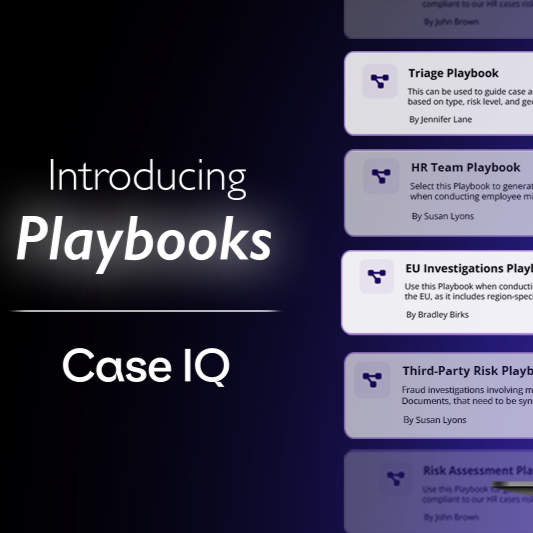
| Case IQ | Multichannel intake, anonymous reporting, multilingual reporting options, comprehensive investigation case management, robust analytics, secure collaboration tools. | Clairia AI assistant provides relevant suggestions and insights; intelligent triaging supports smarter case assignment; Playbooks provide organization-wide AI guardrails. | Highly configurable workflows; custom intake forms; role-based access permissions; many configurations can be completed at the user level without vendor support. |
| HR Acuity | Employee relations case tracking, guided investigation templates, case health alerts, 24/7 hotline, benchmarking analytics. | olivER assistant for summarization, interview question generation, writing assistance, automated category mapping, and translation. | Risk level categorization; customizable workflows and templates; real-time dashboard configuration. |
| AllVoices | Anonymous reporting, investigation workflows, trend dashboards, outcome tracking, secure messaging with involved parties. | Vera assistant for report summaries, recommendation suggestions, SLA tracking, alerts, translation, and automated outcome recommendations. | Customizable intake forms, categories, and templates; toggle-based workflow features; outcome template configuration. |
| ServiceNow | HR case and knowledge management, self-service portals, Anonymous Report Center, mobile access, and workflow management. | Virtual agents and Now Assist GenAI features including summaries, resolution notes, emails, intelligent case classification, and routing. | Built on the Now Platform with custom workflows, SLAs, and case types; extensive integration capabilities; typically requires implementation expertise. |
| NAVEX | Whistleblower hotline, multiple intake channels, global coverage, policy and training linkage, Power BI dashboards, benchmark analytics. | Summarization, translation, formatting assistance, repeat issue detection, trend analysis, automated routing, and reminders. | Intake form customization, workflow configuration, report templates, regional compliance options; complex changes may require vendor support. |
| EQS | Secure anonymous and voice reporting, investigation workflows with milestones, multilingual support, real-time progress tracking. | Transcription, summarization, automatic classification, priority suggestions, anonymization, and regulatory trigger word detection. | Templates, branding options, and country-specific forms. |
| Resolver | Cross-domain incident management, guided intake, SOP playbooks, task assignment, and unified dashboards. | Conversational intake agent, automated tagging and classification, intelligent routing, severity scoring, and threshold-based playbooks. | Flexible routing rules, custom classification logic, and SOP configurations per incident type. |
2026 Incident Reporting and Case Management Platforms
1. Case IQ: Best Incident Reporting & Case Management Software
Case IQ delivers a suite of solutions, including incident reporting and investigative case management software built for ethics, compliance, workplace misconduct, fraud, and security issues. Case IQ integrates its whistleblowing hotline and multichannel intake reporting into its case management solution to ensure quick case triage and resolution and to reduce time and repeated work due to manual case file creation.
Key Features
- Clairia AI assistant helps investigators save time by generating case summaries and timelines, providing policy-aligned recommendations, and detecting potential bias in case documentation
- Multichannel intake supporting web, email, and hotline, with anonymous reporting options to protect whistleblowers
- Integrated, award-winning BI tools use over 75 chart types to provide robust data analytics and trend visibility to catch issues earlier
- Role-based access ensures confidentiality and secure collaboration tools allow experts internal and external to work on cases without sacrificing confidentiality or security
- SOC 2 Type II and ISO 27001 certifications provide airtight data security
Ideal use case: Mid-market to enterprise organizations handling a large volume of reports, and those that want to manage their risk from end to end. Case IQ offers solutions for identifying incidents through hotlines, investigating employee incidents and misconduct, managing corrective and preventive actions, and preventing future workplace issues.
What Customers Have to Say About Case IQ
What do you like best about Case IQ?
The collaborative features for our team, workflow customizations, and data analytics features of Case IQ are invaluable for our team. -Higher Education Employee
I love that Case IQ has the ability for us to communicate with anonymous submissions. It allows us to gather more information and provides a resource and portal for us to organize and see analytics on the cases that come through. Ashley N.
Customizable to our needs, excellent tracking and reporting features. -Higher Education Employee
Put End-to-End Risk Management and Compliance into Action
Book a demo to see how Case IQ's incident reporting and case management software can help your team reduce risk and improve your processs.
2. HR Acuity
HR Acuity provides employee relations case management, serving HR teams that handle disciplinary actions, workplace investigations, and sensitive employee issues. The platform uses guided workflows and best practices for ER professionals.
Key Features
- olivER AI assistant providing writing assistance, case summaries, interview question generation, and automated category mapping
- 24/7 AI-powered employee hotline through the Speakfully platform for continuous incident intake
- Built-in templates and protocols for investigations with guided interview workflows and coaching tips for investigators
- Real-time dashboards with case health alerts, trend tracking, and benchmarking against industry peers
- Risk level categorization (low/medium/high) with pre-built communication templates for consistent handling
- Analytics featuring substantiation rates, outcome trends, and forward-looking forecasting for potential risk spikes
Considerations
- Primary focus on employee relations may require supplementary tools for comprehensive whistleblower compliance at enterprise scale
- Platform centers on internal HR use cases rather than broader investigation needs
3. AllVoices
AllVoices provides an employee incident reporting platform for inclusive reporting environments.
Key Features
- Vera AI assistant that surfaces notifications, tracks SLAs, generates investigation summary reports, and recommends outcome actions
- Anonymous reporting with no IP address tracking, optional personal details, and AES-256 encryption
- Step-by-step investigation workflow with task assignment, recommendation generation, and follow-up tracking
- Trend detection dashboards for identifying patterns across incident types and departments
- Secure messaging with involved parties including outcome letters and update communications
- Audit-ready documentation with detailed access logs and compliance support
Considerations
- Not well suited for organizations with complex investigation needs
- May lack some advanced features for high-risk, multi-step investigations spanning multiple regulatory jurisdictions
4. ServiceNow
ServiceNow’s HR Service Delivery suite extends the Now Platform’s workflow capabilities to incident reporting, case management, and employee relations. Organizations already using ServiceNow for IT service management can use this unified platform architecture.
Key Features
- Now Assist GenAI features generating summaries, email drafts, and resolution notes
- Virtual agent and chatbot capabilities for employee self-service and initial incident intake
- Anonymous Report Center for sensitive incident submissions requiring confidentiality
- Centralized HR workspace connecting incident management with knowledge base, service requests, and other HR functions
- Now Mobile providing mobile access for investigators and employees across devices
- Extensive integration ecosystem connecting with HRIS, identity management, and enterprise systems
Considerations
- Heavy customization typically requires ServiceNow expertise or partner support, increasing implementation complexity
- Breadth of platform capabilities may require significant configuration to optimize for specific ER investigation workflows
- Cost and implementation timeline may exceed specialized incident management platforms for focused use cases
5. NAVEX
NAVEX EthicsPoint provides a whistleblowing and incident management platform for compliance program integration, connecting incident reporting with policy management and training.
Key Features
- Multiple intake channels
- AI tools supporting summarization, translation, formatting, and detection of repeat issues across case types
- BI integration and analytics
- Linkage between reports and relevant policies, training, and HR systems
- Global benchmark comparisons showing organizational performance against industry peers
- Automated routing, reminders, and pattern detection alerts
Considerations
- Deeper customization and complex HR workflow configurations may require vendor assistance
- Platform strength centers on compliance and ethics use cases rather than broad investigation types
- Enterprise features and advanced analytics available in premium tiers may increase total cost
6. EQS
EQS Integrity Line serves organizations operating under European compliance regimes with secure anonymous reporting.
Key Features
- AI-powered transcription of voice reports with automatic summarization and anonymization of personal data
- Support for reporting in 80+ languages with automatic classification and priority suggestions
- Regulatory trigger word detection identifying potential compliance issues during intake
- Secure anonymous reporting with zero tracking of IP addresses or device metadata
- Investigation workflows with customizable stages, milestones, and outcome categories
- Three-tier pricing (Essential, Professional, Enterprise) with increasing customization and AI features
Considerations
- Advanced AI features including transcription and anonymization available as add-ons in higher tiers
- Not well suited to organizations outside of European regulatory environments
- Enterprise tier required for full workflow customization and advanced configurability
7. Resolver
Resolver provides risk intelligence solutions spanning security, physical safety, EHS, fraud, and HR misconduct investigations.
Key Features
- AI-powered automated incident intake and triage featuring conversational intake agent with dynamic questioning
- Entity tagging identifying people, locations, and assets automatically during intake
- Instant classification and routing with severity scoring and trigger-based playbooks
- Guided intake forms supporting media and evidence uploads with predefined workflow playbooks
- Unified dashboard showing incident status by type, severity, and location across all risk domains
Considerations
- Organizations should verify AI frameworks align with specific HR and legal requirements across jurisdictions
- Platform focus on security operations and EHS may overshadow other use cases
How to Choose Incident Reporting & Case Management Software
Step-by-Step Evaluation Process
- Assess current incident volume and complexity. Document annual case counts by type, average investigation duration, and geographic distribution to establish baseline requirements and appropriate platform scale.
- Map existing investigation workflows and pain points. Identify where manual processes create bottlenecks, where documentation gaps create compliance risk, and where visibility limitations hinder decision making.
- Define integration requirements with current systems. Catalog existing tools that must connect with incident management software.
- Evaluate vendor security and compliance certifications. Verify SOC 2 Type II, ISO 27001, and regional compliance certifications match your regulatory requirements and data residency needs.
- Conduct pilot testing with key user groups. Run actual investigations through shortlisted platforms with compliance officers, HR investigators, and other stakeholders to assess adoption readiness.
Questions to Ask Vendors
- How configurable are investigation workflows by incident type, and can administrators make changes without vendor support?
- What AI capabilities assist with case triage, and how does the system handle bias prevention in automated decisions?
- How does the platform handle anonymous reporting while maintaining investigation effectiveness and evidence integrity?
- What integration options exist with our current HR, compliance, and identity management systems?
- How quickly can the platform deploy across multiple locations, and what implementation support is included?
- What training resources and ongoing support options are available during and after implementation?
- How does pricing scale with organization size, user count, and case volume over time?
- How does the platform support asset and configuration management for incident-related resources?
- What post incident review and root cause analysis capabilities are included?
ROI: How to Measure Success
- Investigation time reduction: Track average days from initial report to resolution before and after implementation
- Reporting rate increases: Monitor whether employee concerns surface earlier through improved incident reporting
- Cost savings from automation: Calculate time recovered from eliminated manual processes and reduced administrative burden
- Legal cost reduction: Track whether improved documentation and faster resolution decrease litigation exposure
- Regulatory penalty avoidance: Document reduced fines and sanctions through improved compliance demonstration
Common Mistakes When Choosing Incident Reporting Case Management Software
Focusing only on features without considering user adoption. The most powerful incident management platform fails if investigators and reporters find it difficult to use. Prioritize intuitive interfaces, mobile access, and clear workflows that encourage consistent use.
Underestimating integration complexity. Incident management software must connect with existing HR systems, identity providers, and other tools. Verify API compatibility and integration support before commitment to avoid service disruptions.
Choosing rigid workflows that don’t match investigation processes. Every organization handles incidents differently. Demand configurability that adapts to your investigation protocols rather than forcing workflow changes to match software limitations.
Ignoring security and compliance requirements. Incident data often includes sensitive personal information. Verify certifications, encryption standards, and data residency options before evaluation proceeds.
Skipping pilot testing with actual users. Demonstrations show ideal scenarios; real investigations reveal platform limitations. Run trials with investigation teams using actual case scenarios before making final decisions.
Frequently Asked Questions
What is incident reporting case management software and how does it differ from basic HRIS? Incident reporting case management software provides specialized capabilities for managing incidents—anonymous intake, investigation workflows, evidence management, and compliance reporting—that basic HRIS platforms lack. While HRIS handles routine employee transactions, incident management solutions address complex investigations requiring documentation, collaboration, and regulatory compliance.
How long does implementation typically take for mid-market organizations? Implementation timelines depend on configuration complexity, integration requirements, and user training needs. Organizations with straightforward workflows and minimal integrations deploy faster; those requiring extensive customization or global rollouts should plan for longer timelines.
Does the software integrate with existing HR systems and SSO platforms? Leading incident management platforms offer integrations with major HRIS platforms, identity providers, and enterprise systems. Verify specific integration capabilities for your existing tech stack during evaluation.
What security certifications are essential for sensitive incident data? SOC 2 Type II certification demonstrates verified security controls. GDPR compliance matters for organizations with European operations or employees. Industry-specific requirements—HIPAA for healthcare, additional financial services regulations—should guide certification priorities.
How much does incident reporting case management software cost annually? Pricing varies significantly based on organization size, user counts, case volumes, and feature requirements. Request detailed pricing models based on your specific requirements.
Can the software handle anonymous reporting while maintaining investigation effectiveness? Modern platforms support true anonymity while enabling secure two-way communication with reporters. Investigators can request additional information through the platform without compromising reporter identity.
How do AI capabilities improve investigation efficiency and outcomes? AI assists throughout the incident lifecycle: assisting with triage, generating case summaries and interview questions, detecting bias in investigation notes, and suggesting next steps based on historic cases and internal policies. These capabilities reduce administrative burden while improving investigation quality and consistency.
Conclusion
Modern incident reporting and case management software transforms reactive incident handling into proactive risk management. The best incident management platforms automate manual processes, provide real-time visibility into incident trends, ensure regulatory compliance, and support thorough investigations that protect both employees and organizations.
Determine your specific requirements, conduct thorough pilot testing with actual investigation scenarios, and verify integration capabilities before final selection. The investment in selecting the right incident management platform pays dividends through improved efficiency, reduced risk, and stronger compliance posture.
Request a demo of Case IQ today to see how we can help you reduce risk and resolve incidents faster.
Need help deciding what to look for in an investigative case management system?
This buyer's guide will help you understand how case management software works and what questions to ask in the assessment phase.
Ready to Transform Your Investigation Process?
Join 80,000+ professionals who trust Case IQ to streamline their case management and ensure compliance.