Read Our 2026 Investigative Case Management Benchmark Report

Executive Summary
The 2026 Investigative and Case Management Benchmark Report reveals that the future of investigations is no longer defined by individual processes but instead defined by the strength of the entire case lifecycle. Organizations are accelerating digital transformation at the point of intake, but manual workflows, inconsistent report quality, and limited automation continue to create downstream bottlenecks that impact investigations and reduce operational efficiency. Reported substantiation rates also declined compared with 2025, reinforcing the need to strengthen the entire investigation process. At the same time, organizations are adopting more strategic, expertise-driven, and collaborative investigation models to address these gaps. They are also laying the foundation for AI-enabled investigations through increased technology investment, despite most organizations remaining in the early stages of AI adoption and maturity. The greatest opportunity is clear: organizations that connect people, processes, data, and technology across the entire case lifecycle will be best positioned to improve efficiency, strengthen decision-making, and achieve better investigative outcomes.
By examining the practices, technologies, operational approaches, and outcomes that shape investigations across the entire case lifecycle, this report provides organizations with data-driven benchmarks to evaluate their current state, identify opportunities for improvement, and implement strategies that enhance efficiency, consistency, and investigative outcomes.
Overall observations across the case lifecycle:
Intake
Organizations have established mature reporting channels, but the ways employees submit concerns continue to evolve. Anonymous reporting remains relatively limited, with 45.6% of respondents indicating that fewer than 10% of incidents are reported anonymously. Traditional reporting methods (email, web portal, etc.) continue to serve as the primary intake channels, but organizations are increasingly investing in digital alternatives, including Live Person Chat (32.9%) and AI-Powered Intake (7.9%), which debuted in this report for the first time. In addition, 41.2% of respondents identified AI-Powered Intake as their top planned investment over the next 18 months. It’s clear that the priorities are technologies that improve incident capture, streamline intake, and strengthen the foundation of the investigation process.
Despite expanded access to intake channels and an increased willingness to speak up, report quality has not kept pace. More than 70% of respondents indicate they still require additional information to triage incidents immediately. While organizations continue to invest in more digital intake methods, this is not the case in this part of the investigative process, as 65.8% report not using automation or AI for triage. These findings show that technology adoption is advancing at the front end of the case
lifecycle but has yet to meaningfully improve the quality of information, workflow efficiency, or investigative effectiveness downstream.
Intake trends year over year:
- Digital intake adoption accelerated with Live Person Chat more than doubling from 15.8% in 2025 to 32.9% in 2026, while AI-Powered Intake was introduced for the first time in this benchmark with 7.9% adoption.
- Improved access to reporting and incident capture, with Very Effective ratings increasing from 28.7% to 42.2% and Extremely Effective ratings rising from 5.7% to 8.1%. Despite these gains, 49.7% rated their intake process as Moderately Effective or worse, while 70% of reports still required additional information before triage.
- Anonymous reporting continued to decline, with organizations reporting fewer than 10% anonymous incidents increasing from 30.4% to 45.6%. The trend points to a more trusted reporting environment, where digital reporting channels are reducing barriers and empowering employees to raise concerns with greater transparency.
Triage
This part of the case lifecycle is evolving from a workload management function into a more strategic process focused on matching cases to the right expertise, risk level, and investigative approach. In 2026, organizations most often prioritized captured incidents based on Case Type (23.0%), Subject Matter Expertise (21.8%), and Severity/Complexity (19.5%), highlighting a broader shift toward expertise-driven decision-making. There has also been an increase in investigation teams that combine Dedicated Professional Investigators with Cross-Team Support, rising from 37.9% to 51.3%. This trend underscores the growing importance of collaboration, as organizations increasingly bring together multiple teams and stakeholders to strengthen investigations. Despite these advances, report quality remains a significant challenge: more than 70% of organizations said initial reports contain sufficient information Only Sometimes or About Half the Time, and 57.4% identified Incomplete Reporting as their top triage challenge. Triage also remains largely manual, with 65.8% of organizations reporting No Use of Automation or AI, even though triage is the area most frequently cited as having the highest potential for AI-driven improvement.
These inefficiencies carry into the management stage, where Manual Processes increased significantly from 12.9% in 2025 to 20.4% in 2026. In addition, findings show that organizations are increasingly investing in more flexible learning models, shifting toward On-demand training that enables investigators to quickly develop the knowledge and skills needed to address evolving case types, information gaps, and investigative challenges.
Triage trends year over year:
- Despite continued investment in intake channels, report completeness remains largely unchanged year over year and continues to be a significant challenge. Over 70% of respondents indicated that reports contain sufficient information only Sometimes (36.8%, up slightly from 35.2% in 2025) or About Half the Time (34.6%, compared with 35.2% in 2025), highlighting persistent gaps in report quality.
- Organizations are placing greater emphasis on matching investigators to the needs of each incident. Compared with 2025, assignments based on Case Type increased from 21.3% to 23.0%, Subject Matter Expertise rose from 20.2% to 21.8%, and case Severity/Complexity increased from 18.6% to 19.5%, indicating a growing focus on fit over operational convenience.
- One of the most notable trends was the growing use of investigation teams that combine Dedicated Professional Investigators with Cross-Team Support, increasing from 37.9% to 51.3%. Collaboration is becoming an important role in managing complex investigations and strengthening decision-making.
Management
Once an investigator has been assigned to an incident, organizations are increasingly focused on improving investigation quality while managing resources effectively. Although formal investigation rates remained relatively consistent in 2026, investigators were managing fewer active cases at any given time, with 55.1% of organizations reporting just 1–5 active cases per investigator, up from 40.9% in 2025. At the same time, the nature of investigative work continued to evolve. Evidence-gathering challenges declined from 39.8% to 31.3%, while manual processes increased from 12.9% to 20.4%, highlighting workflow inefficiencies as a growing obstacle to investigation efficiency. To support investigators, organizations are adopting more flexible development models, with quarterly (29.3%) and annual (26.5%) training remaining the most common, alongside growing adoption of on-demand learning.
Management trends year over year:
- Investigation rates remained consistent in 2026, but organizations reported a shift toward fewer active cases being managed simultaneously, with
1-5 active cases becoming the most common investigator caseload (40.9% in 2025 compared to 55.1% in 2026). - Manual Processes are becoming a more prominent bottleneck for investigation, with the percentage of organizations citing them increasing from 12.9% to 20.4%, while Gathering Evidence challenges declined from 39.8% to 31.3%.
- Training for case managers continues to evolve toward greater flexibility. Compared to 2025, organizations reduced Weekly (10.3% to 2.0%) and Monthly (16.6% to 12.3%)
training while increasing both On-demand learning (15.8% to 21.2%) and Annual Training (23.6% to 26.5%), showing a growing focus on delivering training when investigators.
Resolution & Review
Case closure timelines shifted toward the two to four-week range. Compared with 2025, fewer investigations were completed within the first week, with 2–7 day closures declining sharply from 33.3% to 19.5%. Meanwhile, the share of cases closing within 15–28 days rose from 13.8% to 36.2%, while investigations lasting more than four weeks fell from 28.6% to 19.5%. Additionally, substantiation rates remained relatively low, with 49.2% of organizations reporting that 25% or fewer cases were substantiated, while only 21.5% substantiated more than half of reported cases. Among substantiated cases, Warnings (3.74%), Disciplinary Actions (3.42%), and Training Assignments (3.11%) were the most frequently reported outcomes, while more serious ones such as Termination, Demotion, and Legal Action continued to occur less often. Additionally, 60.2% of respondents rated their analytics capabilities as only Moderately Effective or less, highlighting analytics as a key opportunity to better measure investigative performance, outcomes, and organizational impact through AI.
Resolution and review trends year over year:
- The typical case closure window is shifting later within the first month. Compared with the previous year, the share of cases resolved within 2–7 days declined from 34.2% to 21.3%, while closures within 15–28 days increased from 13.8% to 36.2%. Meanwhile, investigations lasting more than 28 days fell from 28.6% to 19.5%, reflecting
longer—but not prolonged— investigation timelines. - Fewer cases were substantiated year over year, with nearly half of organizations (49.2%) reporting substantiating 25% or fewer cases, up from 33.7% in 2025, while the percentage substantiating more than half of reported cases fell from 32.1% to 21.5%.
- Analytics capabilities remain an area for improvement across organizations, with 60.2% reporting only Moderately Effective or less capability in measuring investigative performance and outcomes. Organizations (28%) continue to identify Analytics as the leading area where AI can deliver value through better case prioritization and assessment.
AI Impact Across the Case Lifecycle
While most organizations (59.9%) still Do Not Actively Use AI in case management and investigations, AI adoption remained relatively flat, increasing only slightly from 27.8% in 2025 to 29.9% in 2026. Triage is emerging as a primary focus for AI investment, with expectations for its impact increasing from 13.0% to 20.9%. While Analytics remained the leading area where organizations expect AI to deliver value (24.8%), the sharp increase in interest in Triage signals a shift toward earlier intervention in the investigative process. Despite growing interest, AI maturity remains low, with 70.8% of AI adopters still in Early Exploration of adoption and only 3.6% reporting Fully Mature AI programs. Organizations also shifted their focus from AI governance to technology investment, increasing from 26.9% to 40.7%, while Policy and Procedure Updates declined from 58.2% to 26.5%. However, adoption remains constrained by Data Privacy Concerns (40.3%), Unreliable AI Outputs (30.2%), and a Lack of Organizational Policies (26.5%), indicating that many organizations are still laying the groundwork for broader AI adoption.
AI impact trends year over year:
- AI adoption remained relatively flat in 2026. While AI use increased only slightly from 27.8% in 2025 to 29.9% in 2026, most organizations (59.9%) still reported No AI Use in case management and investigations, indicating that widespread adoption has yet to occur.
- The biggest shift in AI expectations occurred at the front of the investigative process. Interest in AI-Powered Triage increased from 13.0% to 20.9%, while expectations
for Final Report Generation declined from 22.7% to 14.3%. Although Analytics remained the leading area of expected value, organizations are increasingly looking to AI to improve how cases are prioritized and assessed. - Organizations are investing in the technology foundation needed to support broader AI adoption across investigative teams. Investment in AI Technology increased from 26.9% in 2025 to 40.7% in 2026, while updates to AI Policies and Procedures declined from 58.2% to 26.5%.
Approach & Methodology
This benchmark report examines how organizations manage investigations across the entire case lifecycle—from intake (capturing reported incidents) and triage (assigning cases) to case management (conducting investigations) and resolution and post-case review. It explores the practices, processes, technologies, and operational strategies organizations rely on at each stage, delivering a comprehensive view of how investigative teams are evolving. By analyzing the full investigation lifecycle, the report uncovers the trends, challenges, and opportunities shaping modern case management, including the growing influence of AI on investigative efficiency, decision-making, and outcomes.
In this annual benchmarking study, we surveyed over 450+ North American professionals in HR, ethics and compliance, and fraud investigation roles, covering use cases across all aspects of investigations. Respondents represent a range of industries, including both highly regulated and less regulated sectors, such as consumer goods, government, education, financial services, energy, manufacturing, and more, from organizations of all sizes. In addition, year-over-year comparisons are included to help contextualize changes in organizational practices, priorities, and technology adoption. While the respondent sample is not exactly identical each year, the study employs a consistent methodology and captures perspectives from a broad and representative mix of industries, organization sizes, and investigative functions. These factors provide confidence that the results reflect meaningful shifts in the market and offer a credible view of evolving trends across the case management and investigations landscape.
By collaborating with a third-party researcher, Case IQ ensured data collection, analysis, and reporting were methodologically sound and unbiased, with balanced methodologies applied to provide strong representation across all key areas.
To ensure high-quality, balanced, and representative benchmarking results, respondents were meticulously screened against key criteria, including:
- Location: Based in the United States or Canada.
- Role: Responsible for case intake/ reporting, investigation, or case management in at least one relevant area, such as HR/employee relations, accommodations, inquiries, ethics and compliance, or fraud investigations.
- Experience: Has direct involvement in reporting and investigating cases through a third-party solution or internal process for at least one relevant use case.
- Industry: Representing a broad range of sectors, including manufacturing, food and beverage, education, government, and more.
- Organization size: Employed by organizations with 100+ employees, both globally and in North America.
- Assignment: Respondents spanning multiple use cases were assigned to the category where they could contribute the most detailed insights.
About the Researcher

Dr. Rene Arseneault is an Assistant Professor of Human Resource Management at the Université Laval in Quebec City, Canada. His research focuses on recruitment and selection, personality and individual differences, job design, and cross-cultural dynamics in the workplace. He has authored and co-authored numerous peer-reviewed publications in leading academic journals and has presented his research at internationally recognized conferences across North America, Europe, and other regions.
Key Findings, Trends & Implications Across the Case Lifecycle
Intake
Summary
- Intake is modernizing without replacing established channels: Proven intake methods such as Email and In-person continue to dominate, while Live Person Chat more than doubled to 32.9% and AI-Powered Intake debuted at 7.9%, showing investments in both human-supported and technology-enabled reporting experiences.
- Growing confidence in speaking up: There is a shift toward more identified incident reporting and greater employee willingness to report openly. In 2026, 45.6% of organizations reported that fewer than 10% of incidents were submitted anonymously, up from 30.4% in 2025. At the same time, the share of organizations reporting that
most incidents (more than 75%) were submitted anonymously declined sharply from 25.8% to 8.1%. - Better reporting access and incident capture but quality still lags: Although ratings for access to reporting and incident capture improved, with Very Effective increasing from 28.7% in 2025 to 42.2% in 2026, and Extremely Effective ratings rose from 5.7% to 8.1%, nearly half of respondents (49.7%) still rated their intake process as
Moderately Effective or worse. This is reflected in the fact that 70% of reported incidents require additional information before they can be triaged, underscoring the continued challenge of capturing complete and relevant information during the intake process. - Digital and AI-powered intake channels are reshaping reporting preferences: Introduced in this year’s benchmark report, AI-Powered Intake immediately became the most preferred channel (41.2%), while Chatbots (35.7%), Web Portals (28.1%), and Mobile Apps (24.9%) reinforced the growing demand for digital self-service reporting.
Intake Methods Offered

2026 Findings
Established reporting methods remain the cornerstone of intake, but the sharp growth in Live Person Chat (from 15.8% to 32.9%) shows that organizations are responding
to demand for more personalized reporting experiences. AI-Powered Intake was also introduced in this year’s benchmark report and has already gained traction among early adopters (7.9%).
Year Over Year Trends
Organizations largely maintained their core intake foundations between 2025 and 2026. With the increased adoption of Live Person Chat (32.9%) and the emergence of
AI-Powered Intake (7.9%), there’s a growing focus on enhancing user experience through both human-supported and technologyenabled reporting solutions, a topic that
remains relevant across industries with the rise of AI.
Anonymous Reporting

2026 Findings
Anonymous reporting made up a relatively small share of total captured incidents in 2026, with nearly half of organizations (45.6%) reporting that Fewer than 10% of incidents were submitted anonymously and only 8.1% reporting that More than 75% were anonymous.
Year Over Year Trends
Anonymous reporting continues to decline in 2026, with 45.6% of organizations reporting Under 10% anonymous submissions compared to 30.4% last year, while only
8.1% of respondents report more than 75% anonymous submissions, versus 25.8% previously. Overall, this shift shows a stronger trust within the organization, while expanding digital channels may be reducing barriers and making it easier for employees to report incidents in ways that feel accessible and comfortable.
Intake Effectiveness: & Access Capture

2026 Findings
Half of respondents (50.3%) rated their intake methods as Very or Extremely Effective. However, nearly as many (49.7%) still rated their intake process as only Moderately Effective or less.
Year Over Year Trends
Compared to 2025, the effectiveness of accessing and capturing incidents improved, with Very Effective increasing from 28.7% to 42.2% and Extremely Effective from 5.7% to 8.1%. This trend aligns with the increased adoption of digital reporting channels, which may be contributing to improved accessibility of reporting and incident
capture.
Planned Adoption of Intake Channels Over the Next 18 Months

2026 Findings
There is a growing preference for AI-powered and digital intake methods. Notably, AI-Powered Intake was introduced as a response option for the first time in 2026 (given this emerging technology), and it immediately ranked as the most preferred channel, selected by 41.2% of respondents. Chatbots (35.7%), Web Portals (28.1%), and Mobile Apps (24.9%) also ranked highly, reinforcing the shift toward digital self service experiences.
Year Over Year Trends
Compared to 2025, preference for digital and self-service intake channels continued to grow, while traditional channels such as Email, Direct Contact, and text messaging
became less preferred. Email saw the largest decline, dropping from 25.5% to 15.3%.
Implications for Case Managers & Investigators
The intake landscape is becoming more digital, accessible, and employee-centric, creating new expectations for case managers and investigators. While traditional reporting channels such as Email and In-person reporting remain widely used, organizations are increasingly adopting Live Chat and AI-Powered Intake to make reporting easier and more accessible. At the same time, employees appear more comfortable reporting concerns openly, as anonymous reporting continues to decline. However, improved access has not yet translated into higher-quality reports—70% of incidents still require additional information before they can be triaged. As reporting channels continue to diversify, case managers and investigators will need to adapt to a broader mix of intake formats while improving the quality of information captured at intake. This places greater emphasis on structured triage, consistent documentation, and AI-assisted intake that can gather complete, actionable information before an investigation begins.
Triage
Summary
- Triage readiness lags behind intake: As intake methods continue to expand, the quality of initial reporting remains insufficient for effective triage. More than 70% of submissions still require additional information before they can be triaged immediately. Newly introduced in this year’s benchmark, triage challenges highlight that Insufficient Intake Information is the leading barrier to effective assignment (57.4%).
- Triage is based on fit over workflow convenience: Incidents are increasingly prioritized based on expertise and risk, with greater reliance on Case Type (23.0%), Subject Matter (21.8%), and Severity/Complexity (19.5%). There is still a continued focus on matching investigations to the most qualified subject matter expert and improving the outcomes.
- Collaboration is the leading approach to case management: As Incomplete Reports continue to challenge effective triage, organizations are increasingly combining Dedicated Professional Investigators with Cross-Team Support to strengthen investigation quality and decision-making, an approach adopted by 51.3% of organizations.
- Less than one-third of organizations use automation or AI for triage: Triage remains largely a manual process, with nearly two-thirds of organizations (65.8%) reporting No Use of Automation or AI. This indicates that widespread adoption of technology-enabled triage has yet to materialize.
Initial Report Completeness & Quality for Triaging

2026 Findings
Follow-up remains a routine and necessary component of the triage process, with 36.8% of respondents showing that reports contain sufficient information only Sometimes, while 34.6% reported that this occurs About Half the Time. Just 22.3% reported having enough information Most of the Time or always, compared with 6.1% who indicated reports Never contain sufficient information.
Year Over Year Trends
Results were largely unchanged, with only modest shifts across categories. The share of organizations reporting sufficient information Most of the Time declined (23.4%
to 20.8%), while reports requiring follow-up remained the norm, underscoring persistent challenges in report completeness.
How Cases Are Triaged

2026 Findings
Reported incidents are commonly assigned based on Case Type (23.0%), Subject Matter (21.8%), and Severity/Complexity (19.5%), highlighting a strong focus on aligning
investigations with the appropriate expertise and risk level. Business Unit/Function (17.4%) also played a significant role, while Geographic Location (8.2%), First-in/First-out Assignment (5.5%), and Self-assignment (4.3%) were used less frequently.
Year Over Year Trends
Compared to 2025, organizations increased reliance on case type (21.3% to 23.0%), Subject Matter (20.2% to 21.8%), and Severity/Complexity-based assignments
(18.6% to 19.5%), while use of First-in/First-out assignment declined from 8.4% to 5.5%.
Ownership During Triage

2026 Findings
As incidents are reported, organizations overwhelmingly favored collaborative investigation models, with the majority (51.3%) using a combination of Cross-Team Support and Dedicated Professional Investigators. Cross-team support alone remained common (30.9%), while fewer organizations relied solely on Dedicated Professional Investigators (16.4%).
Year Over Year Trends
Compared to 2025, organizations shifted decisively toward an investigation approach that combines Dedicated Professional Investigators with cross-team support,
increasing from 37.9% to 51.3%. At the same time, reliance on cross-team support alone declined from 41.8% to 30.9%, while the use of Dedicated Professional Investigators only remained relatively stable (17.9% to 16.4%).
Top Triaging Challenges

2026 Findings
New to this year’s benchmark, organizations identified information gaps at intake as the primary barrier to effective triage, with 57.4% citing Insufficient Intake Information as their top challenge—well ahead of Manual Assignment Processes (36.7%) and Uneven Workload concerns (30.6%).
The Use of Automation & AI for Triage

2026 Findings
This year’s benchmark introduces a new measure of automation and AI use in case triage, revealing that adoption remains in its infancy. While nearly one-third of organizations (29.4%) have implemented automation or AI to support triage, the majority (65.8%) continue to rely entirely on manual processes, highlighting a significant
opportunity for future technology adoption.
Implications for Case Managers & Investigators
As triage becomes increasingly focused on matching reported incidents to the right expertise and risk level, investigators and case managers will need stronger collaboration, specialized knowledge, and flexible operating models to manage cases effectively. However, persistent gaps in report quality and limited adoption of automation and AI mean that significant time and effort will continue to be spent gathering information, assessing risk, and manually routing cases before investigations can begin. The growing use of Dedicated Professional Investigators alongside Cross-team Support reflects the increasing importance of collaborative case management, particularly as organizations continue to navigate incomplete reports and largely manual triage processes.
Management
Summary
- Investigation rates remain largely unchanged: Overall, formal investigation rates remained consistent. While 44.8% of organizations investigated more than 75% of reported concerns, fewer investigated more than 90% (31.7% to 26.0%), and more investigated 25% or fewer (15.3% to 19.9%).
- Investigators manage fewer active cases at once: Organizations reported fewer active investigations being managed at the same time in 2026, with 55.1% reporting 1-5 active cases per investigator, up from 40.9% in 2025, while the proportion managing 6-10 active cases declined from 31.9% to 19.9%.
- Manual processes rise as evidence-gathering challenges decline:r The nature of investigation bottlenecks shifted in 2026, as Evidence-gathering challenges decreased (39.8% to 31.3%) but Manual Processes increased substantially (12.9% to 20.4%),highlighting ongoing opportunities to improve workflow efficiency.
- Training becomes less frequent but more flexible: Investigation training is most often delivered Quarterly (29.3%) or Annually (26.5%), with organizations increasingly shifting away from frequent training toward Annual and On-demand learning models. These options offer greater flexibility and align more closely with immediate development needs.
Investigation Rate

2026 Findings
44.8% of organizations investigate more than 75% of incidents, but the rates vary widely, with one-third (33.5%) investigating 25% or fewer concerns.
Year Over Year Trends
Investigation rates showed little overall change in 2026. Most categories remained relatively consistent, although the percentage of organizations investigating more than 90% of reported concerns declined (31.7% to 26.0%), while those investigating 25% or fewer increased (15.3% to 19.9%).
Total Number of Active Cases Managed Simultaneously

2026 Findings
Most investigators manage relatively modest caseloads, with most organizations (55.1%) reporting that investigators handle between 1-5 active cases at a time. An additional 19.9% manage 6-10 cases, while only 18.2% report caseloads exceeding ten active investigations.
Year Over Year Trends
Organizations reported lighter investigator caseloads in 2026, with the percentage managing 1-5 active cases increasing significantly from 40.9% to 55.1%. At the same time, the proportion managing 6-10 cases declined from 31.9% to 19.9%, while higher caseload categories remained relatively flat.
Investigation Bottlenecks

2026 Findings
Gathering evidence remained the leading investigation bottleneck, cited by 31.3% of organizations. Manual processes (20.4%) and Resource Constraints (18.2%) were
also significant challenges, while Intake Quality Issues (12.3%) continued to impact investigative efficiency and progression.
Year Over Year Trends
There has been measurable progress in addressing Evidence-gathering challenges, with the percentage of organizations citing it as a bottleneck declining from 39.8%
to 31.3%. However, this improvement was accompanied by growing concerns about Manual Processes (12.9% to 20.4%) and continued pressure due to a Lack of
Resources/Staff (18.2%). Delays in Intake/Report Quality also increased slightly, rising from 11.0% to 12.3%.
Training for Effective Case Management

2026 Findings
Investigation-based training is most delivered Quarterly (29.3%) or Annually (26.5%), while 21.2% offer On-demand training. Frequent training remains uncommon, and 8.8% of organizations report Never providing investigation-based training at all.
Year Over Year Trends
Organizations shifted away from more frequent training in 2026, with declines in Weekly (10.3% to 2.0%) and Monthly training (16.6% to 12.3%). At the same time, Ondemand training increased from 15.8% to 21.2%, and Annual training rose from 23.6% to 26.5%, suggesting a move toward more flexible, need-based learning approaches rather than a scheduled training cadence.
Implications for Case Managers & Investigators
The investigation bottleneck is becoming increasingly operational rather than investigative. While formal investigation rates remained stable, investigators managed fewer active cases and manual processes grew as a leading challenge, replacing Evidence gathering as the primary workflow bottleneck. These results show that future gains in investigation performance will come from simplifying administrative work, standardizing investigative processes, and leveraging AI to accelerate documentation, workflow management, and decision support—allowing investigators to dedicate more time to the work that matters most.
Resolution & Review
Summary
- Case closure timelines shift toward 15-28 days: Compared with 2025, the share of investigations resolved within 2–7 days declined from 33.3% to 19.5%, while the share of closures within 15–28 days increased sharply from 13.8% to 36.2%. At the same time, investigations lasting longer than four weeks became less common, decreasing from 28.6% to 19.5%. There’s a shift away from very short closure times toward more investigations concluding within two to four weeks, without an increase in extended-duration cases.
- Fewer reported cases substantiated: Substantiation rates shifted downward, with nearly half of respondents (49.2%) reporting that 25% or less of cases were substantiated. Only 21.5% reported substantiating more than half of the cases.
- Severe outcomes remained uncommon: Warnings accounted for 3.74% of reported outcomes in 2026, up from 2.98% in 2025. Training Assignments increased to 3.11% (from 2.66%), and Disciplinary Actions rose to 3.42% (from 2.66%). In contrast, Legal Action, Demotion, and Termination continued to represent only a small share of reported outcomes.
- Analytics remains a strategic priority for improvement: Overall, 60.2% of organizations rated their analytics tools as only Moderately Effective or less in measuring investigative performance and outcomes. Reflecting this opportunity for improvement, Analytics was the top-ranked area where organizations expect AI to deliver the most value, with 28.4% identifying it as the highest-priority use case.
Case Closure Time

2026 Findings
Most cases are being closed within two to four weeks. The largest segment of respondents reported closures in 8–14 days (23.0%), while another 55.7% closed between 2–7 days, 15–21 days, and 22–28 days. Overall, nearly four out of five cases were resolved within 28 days, and longduration cases remained uncommon, with only 2.2% extending beyond 91 days.
Year Over Year Trends
Compared with 2025, case closure timelines shifted toward longer investigation periods. The share of cases closed within 2–7 days declined from 33.3% in 2025 to 19.5% in 2026, while closures within 15–21 days increased from 11.0% to 17.8%, and 22–28 day closures grew from 2.8% to 18.4%. The 8–14 day timeframe remained stable at approximately 23% in both years. Meanwhile, the proportion of cases requiring more than four weeks continued to decline.
Substantiation Rate

2026 Findings
Substantiation rates were generally low, with nearly half of respondents (49.2%) reported substantiating 25% or fewer cases, with the largest share (27.8%) reporting substantiation rates of 11–25%. About one-quarter (24.5%) substantiated 26–50% of cases, while only 21.5% reported substantiating more than half of their cases. Overall, most respondents substantiated fewer than half of the cases they investigated.
Year Over Year Trends
Substantiation rates trended lower in 2026 compared with 2025. The proportion of respondents substantiating 25% or fewer of their cases increased from 33.7% to 49.2%, while those substantiating more than half of their cases declined from 32.1% to 21.5%. By contrast, substantiation rates of 26–50% remained relatively flat (26.3% vs. 24.5%) as well as more than 90% (3.5% in both years).
Outcomes of Cases (Mean)

2026 Findings
The most common outcomes were corrective actions rather than severe measures. Warnings (3.74%), Disciplinary Actions (3.42%), and Training Assignments (3.11%) were reported most frequently, while Termination (2.27%), Demotion (1.68%), and Legal Action (1.41%) occurred less often.
Year Over Year Trends
In 2026, across the board, less severe corrective actions have risen. Warnings increased from 2.98% to 3.74%, Training Assignments from 2.66% to 3.11%, and Disciplinary Actions from 2.66% to 3.42%. More severe outcomes, such as Legal Action, remained relatively uncommon and declined slightly (1.60% to 1.41%).
Effectiveness of Investigation Analytics
2026 Findings
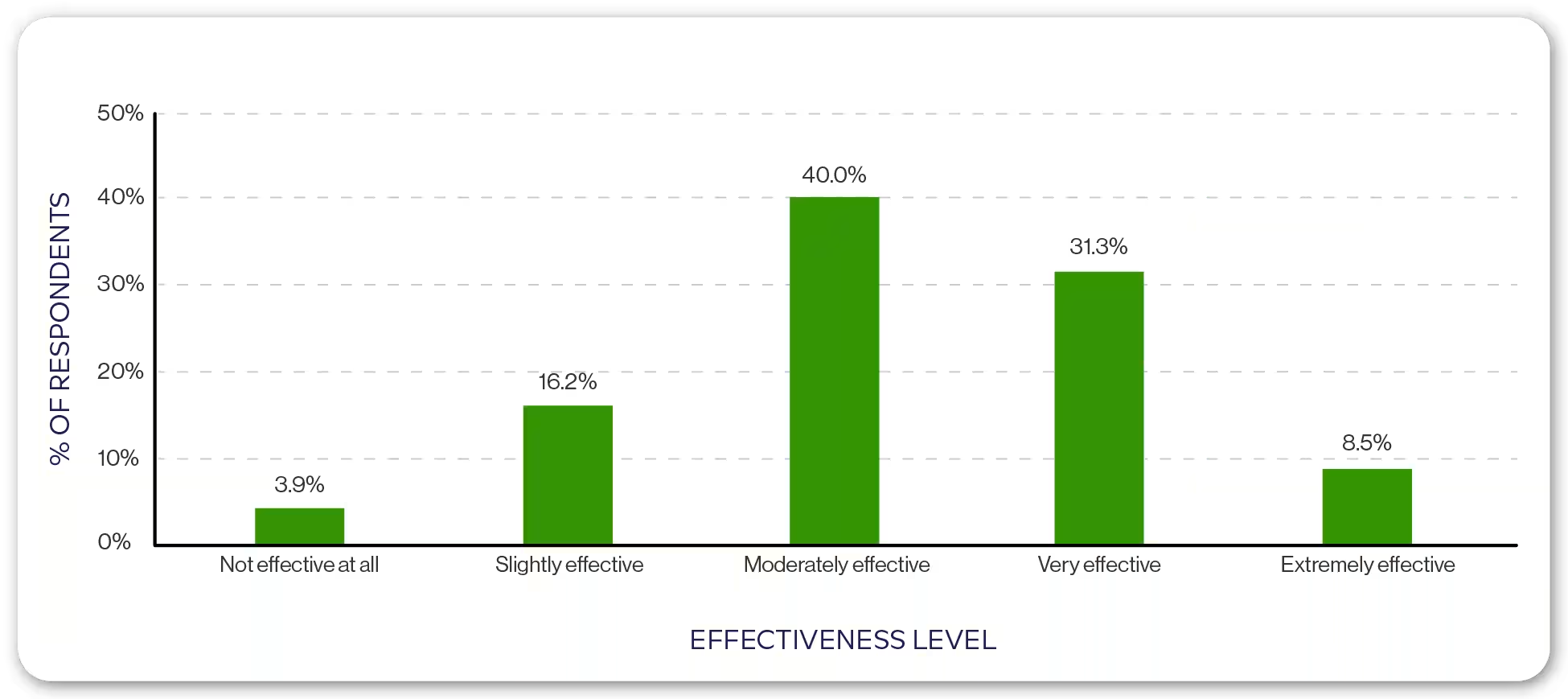
Analytics remain an opportunity for improvement. Overall, 60.1% of respondents rated their analytics capabilities as Moderately Effective or less in supporting investigative outcomes, while only 39.8% reported their capabilities as Very or Extremely Effective. Although nearly four in five respondents (79.8%) rated their analytics as at least Moderately Effective, the findings show that many organizations have yet to develop advanced analytics capabilities that provide deeper visibility into case trends, program effectiveness, and investigative outcomes.
Implications for Case Managers & Investigators
As investigative workflows and processes continue to mature, organizations are balancing the need for timely case resolution with the need for consistent, defensible, and evidence-based outcomes. While fewer cases are being resolved within the first week, most continue to close within one month, suggesting a greater emphasis
on thorough investigations rather than rapid resolution. Lower substantiation rates and the continued reliance on warnings, training assignments, and disciplinary actions further highlight the importance of welldocumented findings. At the same time, organizations are prioritizing investments in analytics, recognizing the value of better data to measure investigative performance, identify emerging trends, and support more informed decision-making through AI.
AI Impact Across the Case Lifecycle
Summary
- AI adoption remains limited and flat: AI adoption remains relatively flat from 27.8% in 2025 to 29.9% in 2026, but 69.9% of organizations still aren’t using AI.
- Early AI maturity among adopters, while AI analytics Is poised to deliver the greatest impact: Most organizations that have adopted AI remain in the Early Exploration of adoption (70.8%), 17.5% have reached Moderate Adoption, and just 3.6% consider their AI programs Fully Mature. As AI maturity increases, organizations are more likely to view Analytics as the area where AI has the greatest impact, particularly in strengthening investigative decisionmaking and prioritizing cases.
- AI adoption is hindered by data privacy: The use of AI continues to be hindered by Data Privacy & Sensitive Information Concerns (40.3%), followed by Inconsistent/Unreliable AI Outputs (30.2%) and a Lack of Organizational Standards/Policies (26.5%), while only 18.8% of respondents struggle to identify suitable AI use cases.
- Triage sees the biggest rise in AI expectations: Organizations believe AI will have the most impact on their Triage processes, rising from 13.0% to 20.9%, while Analytics reached 24.8%, highlighting a growing focus on AI-powered decision making and case assessment.
- AI technology investments become the focus: Organizations shifted their AI focus from governance to technology investment. In 2026, 40.7% reported Investing in AI Technology, up from 26.9% in 2025, while the share updating AI Policies and Procedures declined from 58.2% to 26.5%. This indicates that organizations are moving beyond planning and prioritizing the technology needed to support broader AI adoption.
AI Adoption in 2026

2026 Findings
Most respondents (59.9%) reported that their organizations do not currently use AI to support case management and investigations. A contributing factor may be Data Privacy & Sensitive Information Concerns, cited by 40.3% of respondents. Meanwhile, 29.9% said their organizations Do Not Use AI, while 10.0% were Unsure.
Year Over Year Trends
AI adoption relatively remained flat with a slight increase in 2026, with the percentage of respondents reporting Yes to AI use slightly increasing from 27.8% to 29.9%, while the share reporting No AI use declined from 63.0% to 59.9%.
AI Maturity Among Adopters

2026 Findings
Most organizations remain in the early stages of AI adoption for investigations, with 70.8% reporting either Early Exploration or Limited Adoption. Only 11.6% have reached Advanced or Mature Adoption, highlighting significant opportunities for continued AI investment, integration, and organizational maturity.
AI Challenges

2026 Findings
AI adoption continues to be constrained by Data Privacy & Sensitive Information Concerns (40.3%), followed by Inconsistent/Unreliable outputs (30.2%) and Weak Governance Frameworks (26.5%). Organizations also reported knowledge gaps, with 21.4% citing Insufficient Training and 18.8% indicating uncertainty about how AI should be applied within investigative programs.
AI Across Investigative Workflows

2026 Findings
Analytics (24.8%) is viewed as the area where AI will have the greatest impact, followed by Conducting/Managing Investigations (22.1%) and Triage (20.9%). This highlights a growing focus on using AI to support investigative analysis and decisionmaking rather than administrative tasks such as Incident Intake (17.1%) and Final Report Generation (14.3%).
Year Over Year Trends
Compared to 2025, respondents increasingly expect AI to have the greatest impact in Triage, which rose from 13.0% to 20.9%. Analytics remains the top use case, holding steady at 23.1% in 2025 and 24.8% in 2026. Meanwhile, Final Report Generation saw the largest decline, falling from 22.7% to 14.3%, reflecting a shift in AI’s perceived value from documentation toward highervalue investigative support.
AI Approach in the Past Year

2026 Findings
Organizations are primarily operationalizing AI through technology investments rather than organizational changes. 40.7% reported Investing in AI technology, compared with 26.5% updating AI Policies and Procedures and 10.1% creating AI-specific roles. However, most respondents indicated they have not yet made changes to support AI
adoption.
Year Over Year Trends
Compared to 2025, organizations shifted their focus from establishing governance (policy and procedure updates fell from 58.2% to 26.5%) toward building AI capability through Technology Investments (26.9% to 40.7%). However, the results show that investments are still in the early stages of deployment, with AI adoption remaining limited across most organizations.
Implications for Case Managers & Investigators
AI is becoming an increasingly important tool in case management and investigations, particularly for improving triage and decision making. As organizations expand their use of AI, case managers and investigators can expect greater support in prioritizing high-risk cases, assessing incoming reports, and reducing time spent on manual case review. AI-powered analytics will also help uncover patterns, identify connections across cases, and generate insights that support investigations. With most organizations remaining in the early stages of AI adoption, with 70.8% reporting either Early Exploration or Limited Adoption, some teams are just beginning to integrate these capabilities into their workflows. Ongoing concerns around data privacy, unreliable outputs, and insufficient policies highlight the continued need for human oversight to ensure investigative decisions remain accurate, compliant, and defensible. Ultimately, AI is poised to improve efficiency and effectiveness, but human judgment will remain essential.
Respondent Profile: Demographics & Experience
The 2026 Case IQ Benchmarking Survey included 450+ professionals working across investigations, employee relations, compliance, fraud, and related case management functions. Respondents were predominantly female (59%), averaged 37.5 years of age, and had 8.1 years of industry experience. The sample was largely composed of decisionmakers, with 66% holding supervisory, middle management, or senior leadership positions, including middle managers (45%), supervisors (24%), and senior managers/directors (21%). Participants represented a diverse range of industries, led by government and public administration (16%), health sciences and pharmaceuticals (14%), manufacturing (11%), and business and professional services (11%). Organizations of all sizes were represented, though nearly 60% of respondents worked for employers with more than 500 employees.
- Gender: Majority female (59%), male (41%)
- Age: Mean = 37.5 years
- Years of professional experience: Mean = 8.1 years
- Top industries: Government & Public Administration (16%), Health Sciences & Pharmaceuticals (14%), Manufacturing (11%), and Business & Professional Services (11%)

Conclusion
The future of investigations is no longer defined by the effectiveness of individual processes, but by the strength of the entire case lifecycle. Organizations continue to
strengthen the front end of that lifecycle through digital transformation, with Live Person Chat adoption more than doubling (15.8% to 32.9%) and 41.2% of organizations
identifying AI-Powered Intake as their top planned investment. These investments have improved access to reporting and incident capture, with Very Effective ratings increasing from 28.7% to 42.2%. However, those improvements have not yet translated into greater downstream efficiency. Nearly half of respondents (49.7%) still rated their intake process as Moderately Effective or worse, 70% of reported incidents require additional information before they can be triaged, 65.8% of organizations continue to manage triage without automation or AI, and Manual Investigation Processes increased from 12.9% to 20.4%. Together, these findings demonstrate that strengthening a single stage of the case lifecycle is not enough to improve investigative effectiveness throughout the process.
At the same time, organizations are responding by making investigations more collaborative, expertise-driven, and strategically aligned. Cases are increasingly assigned based on Case Type (23.0%), Subject Matter Expertise (21.8%), and Severity/Complexity (19.5%), while the use of cross-functional investigation teams increased from 37.9% to 51.3%. Organizations are also supporting investigators through more flexible development, with Quarterly (29.3%) and Annual (26.5%) training remaining the most common approaches alongside growing adoption of On-demand learning. Yet investigative outcomes continue to reflect opportunities for improvement across the broader case lifecycle. While fewer investigations were completed within the first week, with 2–7 day closures declining from 33.3% to 19.5%, organizations continued to report low substantiation rates, with 49.2% substantiating 25% or fewer reported cases. Corrective actions remained focused on Warnings, Training Assignments, and Disciplinary Measures, with more severe actions used less frequently. However, organizations continue to face challenges in measuring the effectiveness of their investigation programs. Six in ten organizations (60.2%) rated their analytics capabilities as only moderately effective or less, limiting their ability to evaluate performance, identify opportunities for improvement, and make data-driven decisions. The benchmark findings reinforce that effective investigations require not only investigator expertise, but also consistent processes, high-quality data, and meaningful performance measurement.
Looking ahead, organizations increasingly recognize that AI’s greatest value lies not in automating individual investigative tasks, but in strengthening decisionmaking
across the entire case lifecycle. While overall AI adoption remains relatively low (29.9%), investment in AI technology increased from 26.9% to 40.7%, reflecting continued investment in future capabilities. Although organizations see opportunities for AI across intake, triage, investigations, and resolution & review, Analytics remains the leading area where AI is expected to deliver value, with 28.4% identifying it as the highest-priority use case, while interest in AI-assisted triage increased from 13.0% to 20.9%. Organizations are not simply digitizing and modernizing investigations—they are building the foundation for a more connected investigative ecosystem. The greatest opportunity lies in integrating people, processes, data, and technology across intake, triage, management, resolution and review to improve operational efficiency, strengthen investigative decisionmaking, and achieve more consistent, defensible outcomes.
About Case IQ
Case IQ provides investigative case management software, compliance automation tools, and whistleblower hotline solutions. Trusted by leading companies worldwide, Case IQ combines configurability, AI, robust security, scalability, and intuitive design to empower organizations to proactively address ethical, compliance, and risk management challenges.
To learn more about Case IQ's products and to get a personalized demo, click here.
2026 Investigative Case Management Benchmark Report
Download the PDF version of this report below.
Ready to Transform Your Investigation Process?
Join 80,000+ professionals who trust Case IQ to streamline their case management and ensure compliance.

.avif)