Retaliation Against Compliance Officers: What New Data Reveals About Corporate Compliance

Compliance professionals are often the people organizations rely on to encourage ethical behavior, protect whistleblowers, and surface misconduct before it becomes a crisis.
But what happens when the people responsible for protecting others aren't protected themselves?
A new survey from Compliance Week, produced in conjunction with Case IQ and Radical Compliance, provides a large-scale look at retaliation against compliance officers, and the findings raise important questions about corporate governance, reporting culture, and compliance program effectiveness.
Retaliation Against Compliance Officers is More Common than Many Organizations Realize
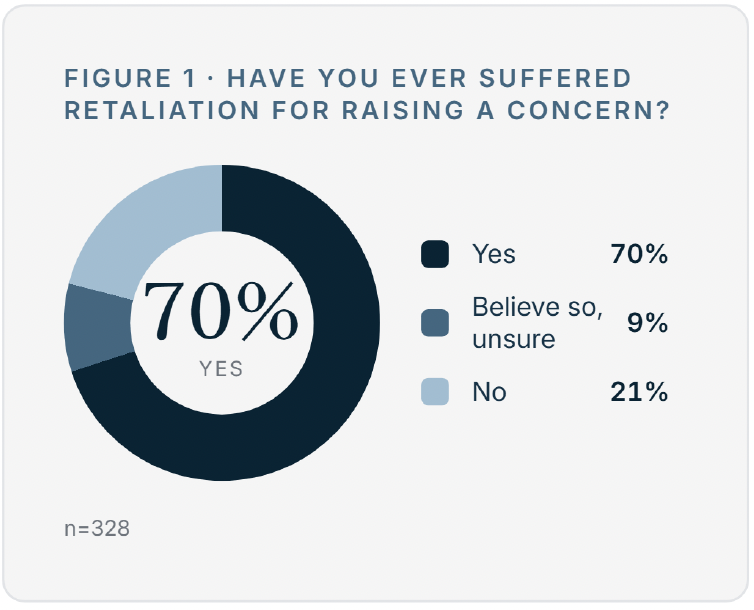
The survey of 328 compliance professionals found that retaliation is not an isolated experience.
Among respondents:
- 70% said they had experienced retaliation after raising ethics or compliance concerns.
- An additional 9% believed they had been retaliated against but weren't completely certain.
- Nearly two-thirds of those who experienced retaliation reported it happened more than once.
Perhaps most concerning, retaliation wasn't limited to dramatic employment actions like termination. The most common forms were subtle workplace behaviors that are often difficult to prove, including:
- Exclusion from meetings
- Reputational undermining or bad-mouthing
- Unwanted changes in responsibilities
However, many respondents also reported more direct career consequences, including denied bonuses, poor performance ratings, and dismissal. These findings suggest that retaliation often occurs through social and professional isolation before it escalates.
Fear of Retaliation Changes Behavior
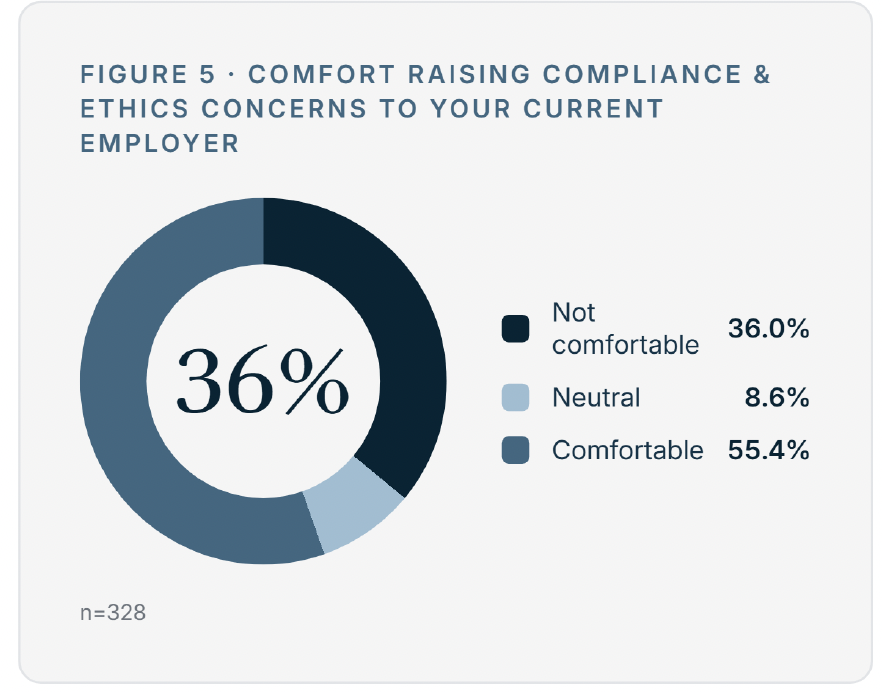
An effective compliance program depends on people speaking up. Yet the survey found that many compliance professionals hesitate to raise concerns themselves.
The research found:
- 36% of compliance officers are uncomfortable raising serious concerns with their current employer.
- 48% said fear of retaliation had prevented them from raising an issue at some point during their career.
This creates a governance paradox.
Organizations spend significant time and resources encouraging employees to report misconduct through whistleblower hotlines and internal reporting channels. But if compliance professionals themselves don't feel psychologically safe raising concerns, it raises difficult questions about whether the broader reporting culture is functioning as intended.
New Global Whistleblowing Research: What Employees Really Think About AI, Ethics & Retaliation
Hear from our internal experts about how the fear of retaliation is hindering speak up cultures across departments, plus other whistleblowing insights.
Retaliation Often Comes from Management
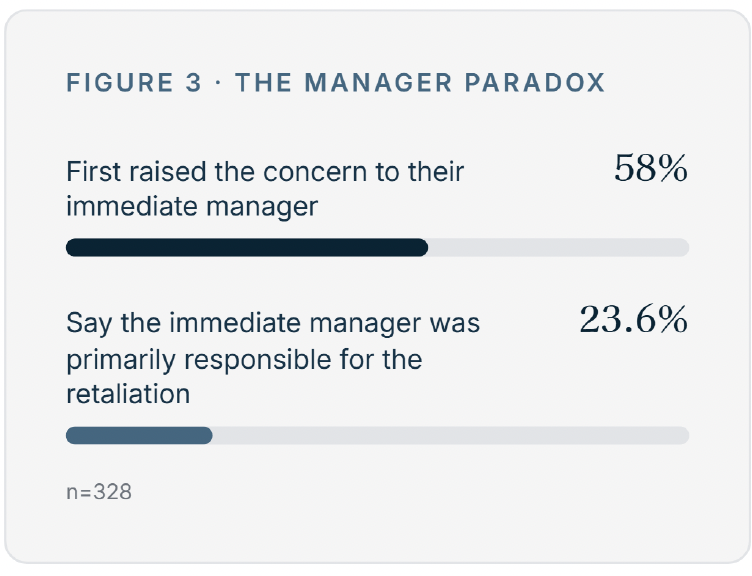
The survey also highlights where retaliation originates.
More than half of respondents first reported concerns to their immediate manager, which is consistent with broader workplace reporting trends. However, nearly one-quarter identified that same immediate manager as the person primarily responsible for the retaliation they experienced.
This finding reinforces why organizations need reporting structures that extend beyond the traditional management chain. For boards and executive leadership, it also underscores the importance of ensuring compliance leaders have direct, independent access to governance bodies when significant concerns arise.
Many Compliance Officers Don't Believe Reporting Will Lead to Action
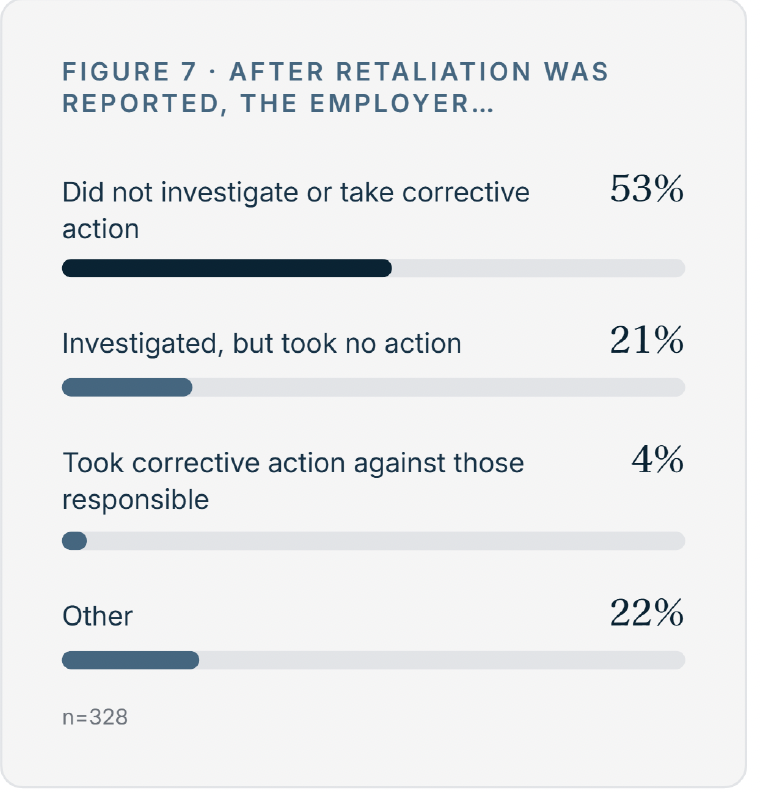
Reporting misconduct is only valuable if employees believe something will happen afterward. Unfortunately, the survey suggests that confidence in organizational response remains limited.
Among respondents who reported retaliation:
- 53.6% said no investigation or corrective action followed their report.
- Another 21% said the organization investigated but ultimately took no action.
- Only 4% reported that corrective action was taken against those responsible.
When retaliation goes unaddressed, organizations risk sending an unintended message that raising concerns carries personal risk but little organizational support.
What These Findings Mean for Compliance Leaders
While every organization is different, the survey reinforces several broader themes that align with current regulatory expectations around effective compliance programs.
Organizations should consider whether they have:
- Multiple reporting pathways beyond direct managers.
- Trusted, confidential reporting channels.
- Consistent investigation and case management processes.
- Clear documentation of retaliation allegations and outcomes.
- Board-level visibility into reporting culture and retaliation trends.
Modern compliance technology can also play an important role by centralizing whistleblower reports, documenting investigations, identifying recurring patterns, and providing analytics that help leaders monitor organizational culture over time. Case IQ helps teams manage risk from end to end with our solutions for confidential whistleblower intake and case management to help organizations strengthen both reporting culture and investigative consistency.
Building a Culture Where Compliance Officers Can Speak Up Confidently
One of the report's most important observations is also its simplest: compliance officers should be able to raise concerns without fearing retaliation.
That expectation isn't just about protecting compliance professionals; it strengthens the entire organization. When compliance leaders feel safe escalating issues, organizations gain earlier visibility into risks, stronger governance, more effective investigations, and ultimately more resilient compliance programs.
As regulatory expectations continue to emphasize proactive risk detection, organizational culture remains one of the most important indicators of compliance program effectiveness. A culture where compliance professionals can raise difficult issues without fear benefits employees, leadership, boards, and the business as a whole.
See Case IQ in Action
Want to learn how Case IQ's suite of solutions can help you protect employees, build trust, and reduce risk? Book a personalized demo with one of our experts today.
How Case IQ Can Help
Building a culture where compliance professionals feel safe speaking up requires more than good intentions. Organizations need consistent reporting channels, structured investigations, reliable documentation, and meaningful visibility into trends that may otherwise go unnoticed.
Case IQ helps organizations manage risks at every stage, from prevention and detection to investigation and remediation. Here's what you can do with Case IQ:
- Provide safe reporting channels. Case IQ's Whistleblower Hotline enables employees, contractors, and third parties to report concerns through secure, confidential, multilingual reporting channels available 24/7. By making reporting more accessible and protecting reporter confidentiality, organizations can encourage earlier reporting of misconduct while supporting a stronger speak-up culture.
- Investigate consistently and efficiently. Once a report is submitted, Case IQ's Case Management platform centralizes evidence, interviews, documentation, and investigative workflows into a single system. Clairia, the AI assistant, can help investigators summarize information, identify missing details, generate interview questions, and organize evidence, allowing investigators to focus on critical decision-making while maintaining consistency throughout the investigation process.
- Identify patterns across cases. Retaliation often appears as isolated incidents until viewed collectively. Case IQ's reporting and analytics help organizations identify recurring trends, departments with elevated risk, repeat subjects, and systemic issues that may indicate broader cultural challenges rather than one-off events.
- Move from reactive to proactive compliance. Beyond managing reported concerns, Case IQ's Compliance Monitoring solution continuously analyzes transactional data for indicators of fraud, bribery, conflicts of interest, sanctions violations, and other compliance risks. Together with whistleblower reporting and investigations, organizations gain a more complete view of organizational risk, helping compliance teams detect issues earlier and demonstrate the effectiveness of their compliance programs.
By offering solutions for whistleblower reporting, investigations, compliance monitoring, approvals and disclosures, and third-party management, Case IQ helps organizations build compliance programs that not only respond to misconduct, but also strengthen trust, transparency, and accountability across the business, all with one trusted vendor.
Frequently Asked Questions
What is retaliation against a compliance officer?
Retaliation occurs when a compliance professional experiences negative treatment after raising ethics or compliance concerns. Retaliation can include subtle behaviors such as exclusion from meetings or reputational damage, as well as more direct actions like demotions, denied promotions, reduced compensation, or termination. The survey found that social punishment was the most commonly reported form of retaliation.
How common is retaliation against compliance officers?
According to the Compliance Week survey produced in partnership with Case IQ and Radical Compliance, 70% of respondents said they had experienced retaliation at some point during their careers after raising compliance concerns, while another 9% believed they had likely experienced retaliation.
Why is retaliation against compliance professionals a business risk?
When compliance professionals fear retaliation, serious risks may never be escalated to leadership. This can weaken an organization's speak-up culture, delay investigations, reduce trust in compliance programs, and ultimately increase regulatory, financial, and reputational risk.
What are the most common forms of retaliation?
The survey found that retaliation often takes the form of workplace exclusion and reputational harm rather than immediate termination. Common examples include:
- Exclusion from meetings
- Being bad-mouthed by colleagues
- Unwanted changes in responsibilities
- Poor performance ratings
- Denied bonuses or salary increases
- Termination
How can organizations reduce retaliation risk?
Organizations can strengthen protection for compliance professionals by:
- Providing multiple confidential reporting channels.
- Ensuring independent, well-documented investigations.
- Establishing clear anti-retaliation policies.
- Giving compliance leaders direct access to boards or audit committees when appropriate.
- Using analytics to identify recurring retaliation patterns across the organization.
How does technology help prevent retaliation?
Technology cannot eliminate retaliation on its own, but it can make it easier to identify, investigate, document, and monitor retaliation concerns. Integrated compliance platforms help organizations centralize reports, maintain complete audit trails, identify repeat patterns, and provide leadership with meaningful reporting on organizational culture and compliance trends.
Ready to Transform Your Investigation Process?
Join 80,000+ professionals who trust Case IQ to streamline their case management and ensure compliance.
.avif)