2027 Essential AI Insights for Investigative & Compliance Teams

Introduction
Executive Summary
Artificial intelligence is transforming how organizations investigate misconduct, manage compliance risks, and improve operational efficiency. As AI evolves from standalone tools to increasingly intelligent, integrated workflows, ethics and compliance (E&C) teams face new opportunities to strengthen their programs while navigating challenges around governance, privacy, and human oversight.
This report brings together two perspectives: findings from our 2026 Investigative Case Management Benchmark Report, which provides data-driven insights into AI adoption and its expected impact across the case lifecycle, and the expertise and forward-looking insights of Andy Miller, SVP of Analytics & AI at Case IQ, on how AI will reshape ethics and compliance.
The report explores three key areas:
- AI for Investigations: What the benchmark research reveals about AI adoption, maturity, and opportunities across intake, triage, case management, analytics, and resolution.
- AI for Compliance: How AI has evolved, the key developments that shaped 2026, and what these changes mean for compliance programs.
- AI in 2027: The trends expected to define the next phase of AI, including the rise of AI agents and harnesses, practical strategies for operationalizing AI, and the governance considerations E&C teams must address.
Together, these insights provide E&C leaders with a practical perspective on how to move beyond AI experimentation and responsibly integrate AI into their everyday workflows to improve efficiency, decision-making, and risk management.
About the Insights

Andy Miller, SVP of Analytics & AI at Case IQ, brings extensive experience in compliance analytics, internal audit, and risk management to Case IQ's approach to AI innovation. As SVP of Analytics & AI, he plays a key role in operationalizing AI across the organization, from identifying practical use cases and establishing processes to documenting and sharing best practices. His hands-on experience and industry expertise inform the forward-looking insights in this report, offering E&C professionals practical guidance for navigating their own AI adoption journeys.

Case IQ's 2026 Investigative Case Management Benchmark Report provides research-backed insights into how organizations manage investigations and adopt emerging technologies. Conducted in collaboration with independent researcher Dr. René Arseneault of Université Laval, the study surveyed more than 450 North American professionals across HR, ethics and compliance, fraud investigations, and related functions. The findings reveal current AI adoption levels, challenges, and opportunities across the case lifecycle, providing a data-driven foundation for understanding how AI can improve investigative processes and outcomes.
How to Use This Report
This report is designed for investigative and E&C teams at different stages of AI adoption:
- Beginner stage: organizations get an overview of where AI can create value and what foundations should be established before implementation.
- Experimentation stage: learn how to move beyond isolated use cases toward more integrated, consistent, and measurable workflows.
- Mature AI operations stage: examine the implications of increasingly autonomous AI systems and the governance structures required to deploy them responsibly.
Readers can use the findings and recommendations to identify opportunities to conduct more thorough investigations, improve intake and triage, operationalize organizational policies, strengthen proactive compliance monitoring, and evaluate AI-related risks.
Above all, the report encourages investigators and E&C professionals to approach AI as an operational capability rather than a standalone technology initiative.
How AI Was Used for Investigations in 2026
What Case IQ's 2026 Investigative Case Management Benchmark Report Reveals
Investigations are a key component to successful ethics & compliance programs and managing workplace risk. They also require a lot of documentation, evidence gathering and analysis, interviewing, and other time-consuming tasks.
AI has the potential to reduce repetitive work throughout this process, helping investigators organize information, identify relevant details, and make defensible, data-driven decisions.
However, Case IQ's 2026 benchmark demonstrates that AI adoption remains limited, even as interest in its potential continues to grow.
The AI Adoption Gap
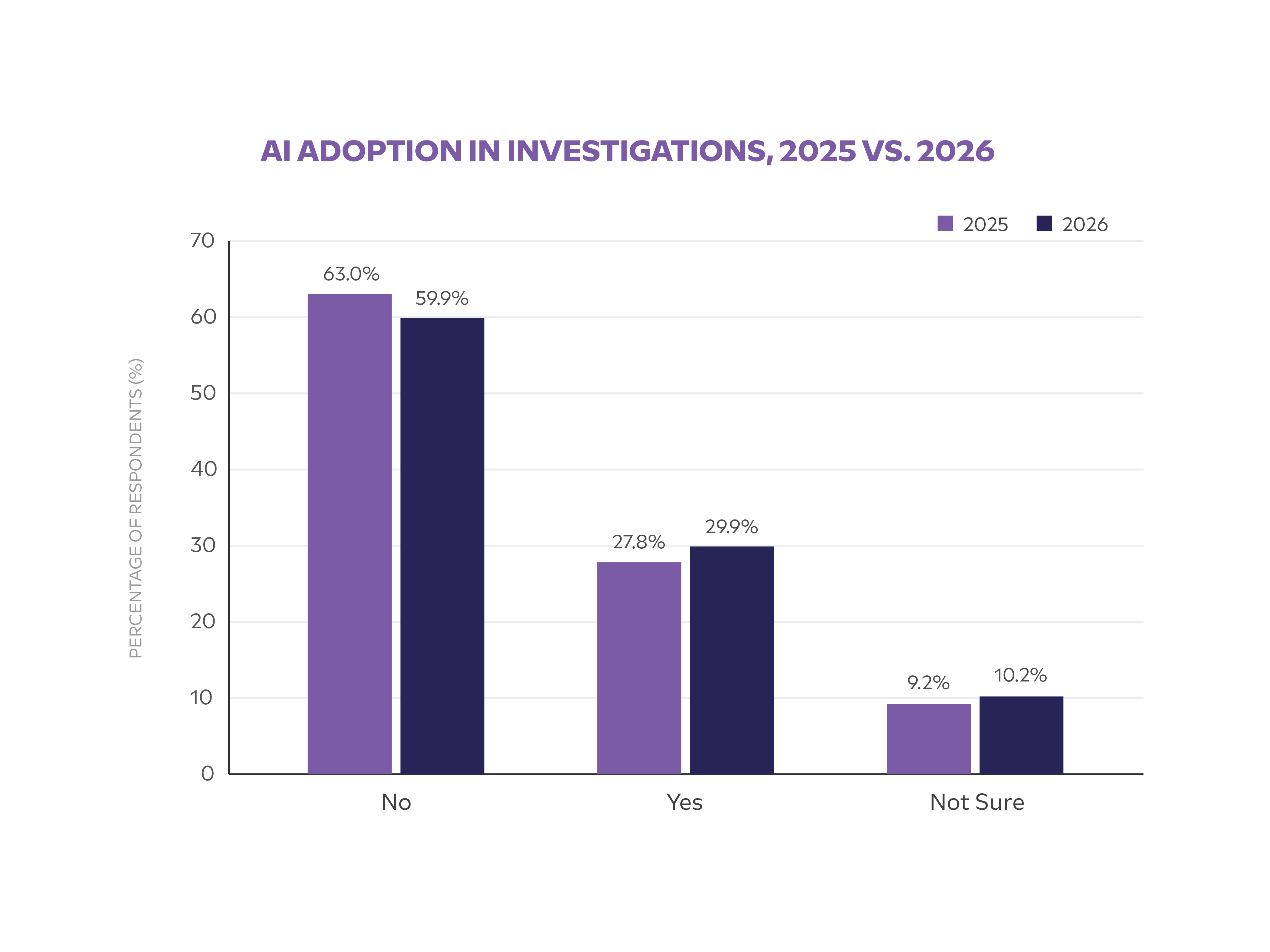
Despite rapid developments in AI capabilities, adoption within investigative functions increased by only 2.1 percentage points between 2025 and 2026.
Nearly six in ten organizations (59.9%) reported that they were not actively using AI for investigations or case management. Even among organizations that had adopted AI, maturity remained limited.
These results suggest that most organizations have not yet integrated AI deeply into their investigative operations. The challenge is not necessarily identifying potential applications.
Only 18.8% of respondents cited uncertainty about suitable AI use cases as an adoption barrier. Instead, organizations are struggling with the requirements for using AI responsibly.
Data privacy and sensitive information concerns were the leading barrier, cited by 40.3% of respondents. Another 30.2% identified inconsistent or unreliable AI outputs, while 26.5% pointed to insufficient organizational standards or policies. These concerns are understandable.
Investigations often involve confidential employee information, allegations of misconduct, legal exposure, and evidence that must be handled carefully. Organizations need confidence that AI tools can support this work without compromising the integrity of the investigative process.
Nevertheless, the research also suggests that organizations increasingly recognize where AI could deliver meaningful value.
AI's Expected Impact Across the Case Lifecycle
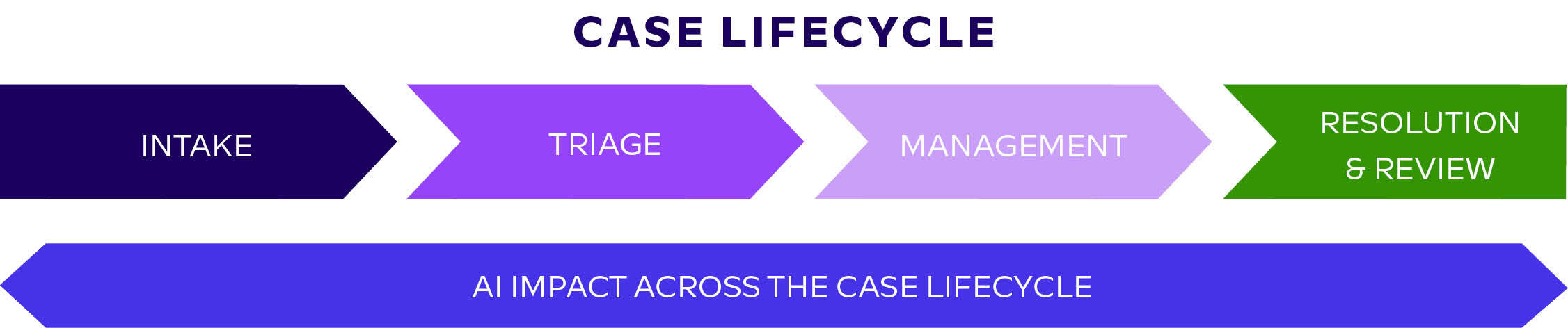
The case lifecycle consists of four key stages: intake, triage, management, and review and resolution. Each presents unique opportunities for AI to reduce manual work, improve efficiency, and support more thorough, informed investigations.
When respondents were asked where AI would have the greatest impact, their answers revealed a shift in priorities. Analytics remained the leading area of expected AI impact at 24.8%, followed by conducting and managing investigations at 22.1% and triage at 20.9%. The most notable change was the growing interest in triage, which increased from 13.0% in 2025 to 20.9% in 2026. Meanwhile, expectations for final report generation declined from 22.7% to 14.3%.
This shift suggests that organizations are beginning to look beyond basic generative AI applications, such as summarization and document drafting, toward capabilities that support more complex investigative work.
Intake: Improving the Quality of Information
The case lifecycle begins when an organization receives a report of potential misconduct. AI-powered intake tools can support this process by helping reporters provide more complete information, identifying missing details, and asking relevant follow-up questions.
These capabilities are particularly valuable when reports involve complicated circumstances or reporters are uncertain about what information to provide.
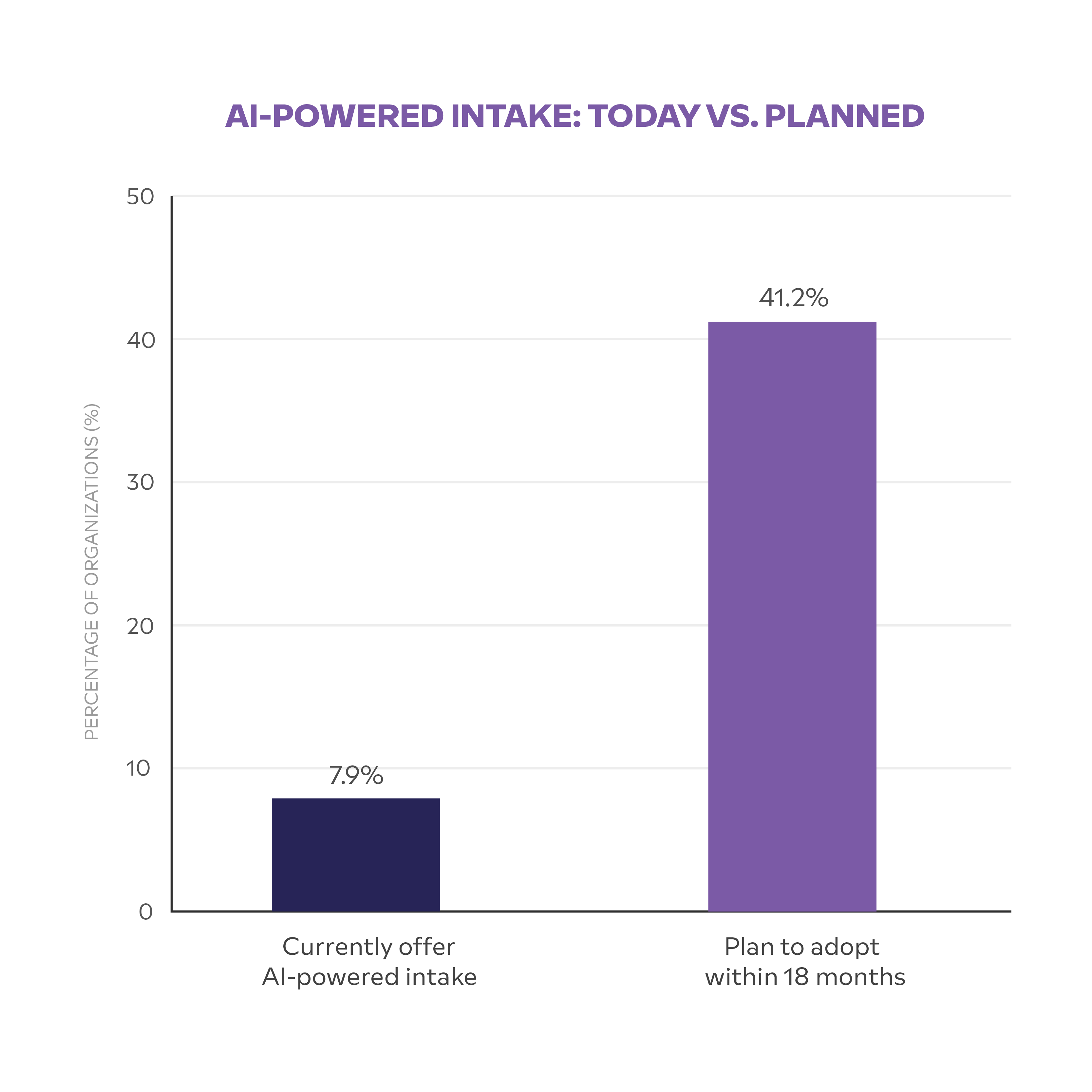
Case IQ's benchmark report found that AI-powered intake was already offered by 7.9% of organizations in 2026. Although adoption remained relatively low, interest was substantially higher.
41.2% of respondents identified AI-powered intake as a reporting channel they planned to adopt within the next 18 months, making it the most frequently selected planned intake channel.
This gap between current adoption and planned investment demonstrates the potential organizations see in AI-assisted reporting.
For example, an AI-enabled intake process could help a reporter clarify when an incident occurred, identify individuals involved, and provide supporting details that might otherwise be omitted.
Multilingual AI assistance could also help organizations make reporting more accessible across global workforces.
The goal is to capture better information at the beginning of the process, reducing unnecessary follow-up and giving investigators a stronger foundation for their work.
However, organizations should preserve accessible human reporting alternatives and ensure that AI-assisted interactions do not discourage employees from raising sensitive concerns.
Triage: The Fastest-Growing Area of AI Interest
Triage is emerging as one of the most significant opportunities for AI in investigations.
It is the stage where organizations evaluate incoming allegations, determine their seriousness, and identify the appropriate investigative response.
In 2026, 20.9% of benchmark respondents identified triage as the area where AI could have the greatest impact, up from 13.0% the previous year.
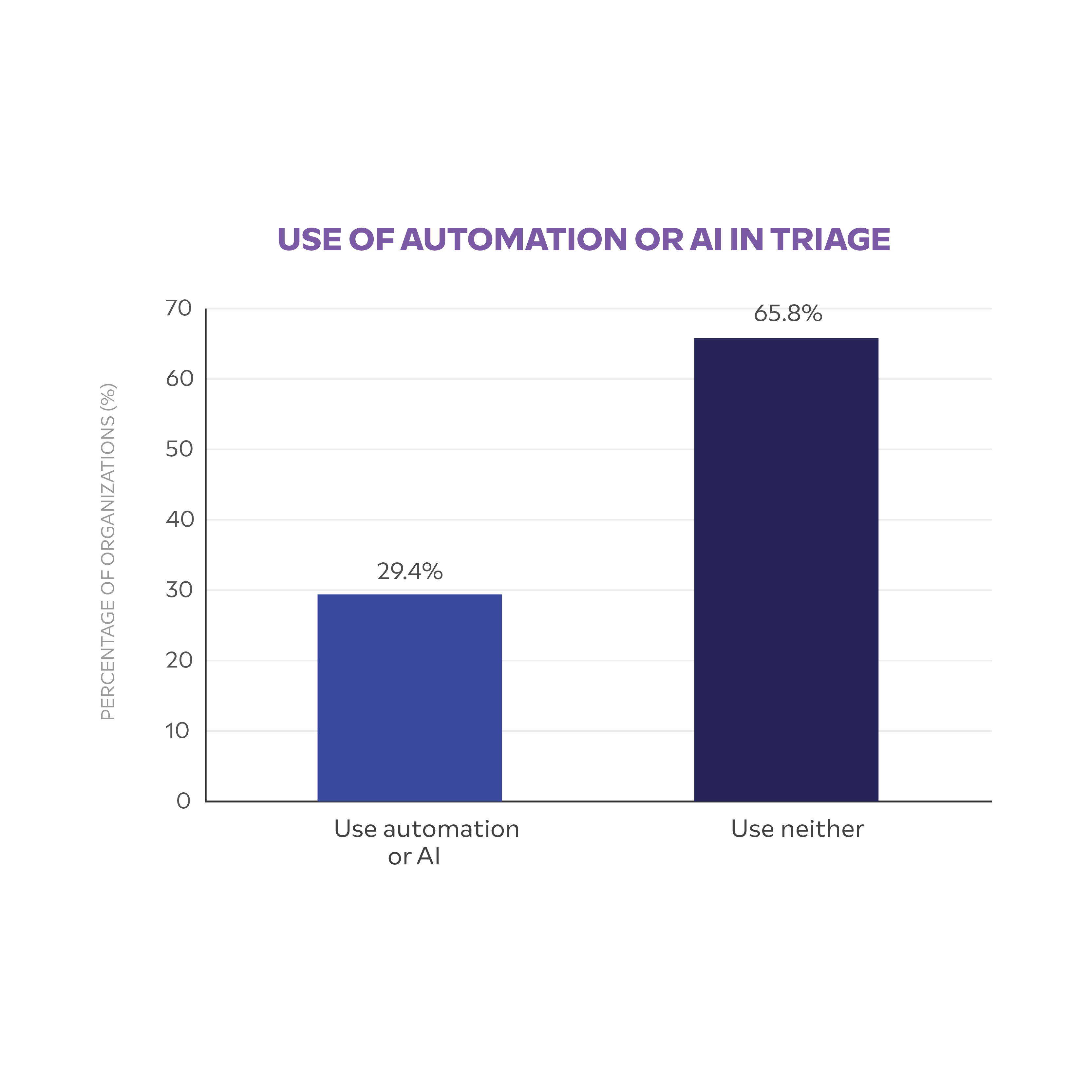
Yet adoption remained limited. Only 29.4% of organizations reported using automation or AI to support triage, while 65.8% did not use either technology. This represents a substantial opportunity to improve how organizations assess and route cases.
AI can assist by categorizing incoming reports, identifying relevant policies, organizing allegations, and highlighting information that requires clarification.
It may also help suggest the appropriate investigative team based on case type, subject matter, or established organizational procedures.
As AI agents become more capable, these activities could increasingly be coordinated as part of a connected workflow.
For example, an AI tool could receive a report, identify missing information, retrieve relevant policy guidance, and prepare a preliminary case summary before an investigator begins their assessment. The human investigator would remain responsible for deciding whether an investigation is warranted and what action should follow.
This distinction matters. AI can help investigators understand and prioritize information, but it should not independently determine the credibility of allegations or make consequential investigative decisions.
Investigation Management: Moving Beyond Administrative Assistance
AI is also gaining attention for its ability to help manage cases once they have been created and assigned.
In the benchmark report, 22.1% of respondents identified conducting and managing investigations as the area where AI could deliver the greatest impact.
Unlike basic document generation, investigation management requires AI to work with multiple sources of information, understand relationships between facts, and support tasks that evolve as a case progresses.
For example, investigators may need to review interview notes, analyze supporting documents, compare statements, and identify relevant policy requirements.
AI can help organize this information and make it easier to navigate. An investigator reviewing a complex allegation could use AI to prepare a timeline of events, identify inconsistencies between witness accounts, or suggest follow-up questions based on the information already collected.
The next opportunity is for AI to support these activities as part of a continuous workflow rather than requiring investigators to initiate each task independently. However, AI-generated observations must be validated against the underlying evidence. AI should help investigators identify information worth examining, not establish findings without appropriate human review.
Review and Resolution: From Report Generation to Better Insights
Some of the earliest applications of generative AI in investigations focused on drafting case summaries and final reports. These tasks remain valuable because investigators often spend substantial time consolidating information into clear documentation. However, the benchmark suggests that expectations are evolving.
Interest in AI for final report generation declined from 22.7% in 2025 to 14.3% in 2026. At the same time, analytics remained the leading area of expected AI impact, selected by 24.8% of respondents. This suggests that organizations increasingly see AI's value in helping them interpret investigative information rather than simply document it.
AI-powered analytics could help teams identify recurring allegations, patterns across departments, relationships between cases, or trends that warrant further review.
At the individual case level, AI could help investigators assess whether relevant information has been considered and whether the evidence supports the documented findings. At the program level, AI could help investigative and E&C teams better understand investigative performance and emerging risks.
However, AI-generated findings should remain subject to human review, particularly when they could influence disciplinary actions, regulatory disclosures, or other high-stakes outcomes.
The Bigger Picture: AI Across the Entire Case Lifecycle
The benchmark findings reveal a changing perception of AI's role in investigations. Organizations are moving beyond viewing AI primarily as a tool for writing summaries or automating isolated administrative tasks. Instead, they are increasingly interested in capabilities that support analysis, prioritization, and decision-making throughout the case lifecycle. This evolution creates an opportunity to connect the different stages of an investigation.
Information collected during intake can inform triage. Triage decisions can guide investigative planning. Evidence gathered during an investigation can support review and resolution. Findings can then inform broader risk assessments and future prevention efforts.
AI can help make these connections more efficient, but only when the underlying systems provide appropriate context, access controls, and human oversight. This is where the concept of the AI harness becomes especially important.
By incorporating AI into everyday investigative processes, organizations can reduce manual work, bring greater clarity to complex cases, and help investigators make more informed decisions. From organizing information to identifying important details, AI can improve efficiency and allow investigators to focus on higher-value work. These benefits extend beyond investigations, creating opportunities for E&C teams to streamline compliance processes, strengthen risk management, and work more effectively.
2026 Trends in AI for Compliance
How We Got Here: From Chatbots to AI Agents
The pace of AI development over the past several years has been extraordinary.
However, the most important changes have not been limited to improvements in model intelligence. The way people interact with AI (and the types of work AI can perform) has also evolved.
While Case IQ’s 2026 benchmark report findings reveal how AI is reshaping the case lifecycle, its impact extends far beyond investigations. Drawing on his expertise and hands-on experience operationalizing AI at Case IQ, Andy Miller, SVP of Analytics & AI, explores the trends driving AI’s evolution, what they mean for ethics and compliance teams, and how organizations can prepare for the opportunities and challenges ahead in 2027.
2024: The Year of the Chatbot
In 2024, AI was largely defined by chatbots.
Generative AI tools demonstrated impressive capabilities in answering questions, generating text, and summarizing information. But skepticism remained widespread.
Organizations were concerned about hallucinations, data privacy, reliability, and the lack of clear governance. Many professionals experimented with AI, but relatively few teams had incorporated it meaningfully into their everyday processes.
For compliance professionals, AI was interesting but often disconnected from the policies, procedures, and information needed to support actual compliance work.
2025: The Year of Vibe Coding
In 2025, AI became increasingly accessible as a tool for creating and building.
The rise of "vibe coding" demonstrated how natural-language instructions could help people develop software, automate activities, and turn ideas into functioning applications. This represented an important shift in where value was created.
Technical expertise remained important, but domain knowledge and the ability to define a problem became increasingly valuable.
For E&C professionals, this development was particularly relevant. Compliance teams understand their organizations' risks, policies, regulatory obligations, and investigative processes. That expertise is essential for determining what AI should do and how its work should be evaluated.
As AI makes technical capabilities more accessible, E&C professionals have an opportunity to play a more direct role in shaping the tools and workflows they use.
2026: The Year of Integration, Application, and Agents
By 2026, AI was moving beyond individual prompts and experiments. AI systems were increasingly capable of interacting with tools, retrieving information, and supporting multi-step workflows. The emergence of AI agents expanded expectations about what could be automated.
Rather than simply answering a question, an AI agent could potentially gather information, perform a sequence of tasks, and prepare results for human review. This changed the conversation from what AI could generate to what it could accomplish.
For E&C teams, the possibilities became more concrete: AI-supported intake, automated information gathering, risk analysis, investigative preparation, and coordinated compliance workflows. However, these capabilities also raised new questions about permissions, oversight, and accountability.
Looking Back: The Six AI Themes That Defined 2026
At the beginning of 2026, Case IQ identified six key themes expected to shape the evolution and adoption of AI. These predictions were informed by our ongoing conversations with customers, insights from customer advisory boards, participation in industry conferences and speaking engagements, and Andy Miller’s hands-on experience leading AI initiatives at Case IQ.
Together, these perspectives provided a firsthand understanding of the opportunities, challenges, and emerging trends shaping AI adoption across ethics and compliance. As the year progressed, these six themes largely held true, reinforcing our outlook on how AI is evolving and what investigative and E&C teams should prioritize as they prepare for 2027.
1. AI Became Actionable
In 2026, AI moved beyond experimentation to become a practical tool for completing real work. A major driver was the rise of AI harnesses, which combine prompts, models, connected tools, organizational context, and safeguards to help agents execute multi-step tasks.
Research highlighted by technology investor Tomasz Tunguz in September 2026 found that changing the harness around the same AI model reduced the cost per successfully completed task by 71% in a coding-agent benchmark, without a statistically significant difference in quality. While these findings come from software development, they demonstrate how the infrastructure surrounding AI can dramatically improve its effectiveness.
For E&C teams, this laid the foundation for AI agents that can access relevant information, support investigative workflows, and complete meaningful tasks with less manual intervention.
2. Autonomous Workflows Became More Practical
AI agents gained significant momentum in 2026, moving from experimental applications toward tools capable of coordinating activities, gathering information, and completing multi-step tasks. According to Menlo Ventures' September 2026 research, 41% of U.S. AI users had tried an AI agent, while 24% reported using one regularly. This growing familiarity signals an important shift toward delegating work to AI rather than simply asking it questions.
For investigative and E&C teams, autonomous workflows could streamline activities such as organizing incoming reports, retrieving relevant policies, and preparing investigative summaries. However, as AI takes on greater responsibility, maintaining human oversight and approval for consequential decisions will become increasingly important.
3. AI Became More Capable of Handling Multiple Tasks
One of the biggest breakthroughs of 2026 was that AI agents gained access to their own computing environments, complete with browsers, file systems, and connected applications. Rather than relying on information manually entered into a chatbot, agents could navigate systems, retrieve data, and complete multi-step tasks independently, even while users worked on other priorities.
This progress is reflected in OSWorld, the standard test for an AI operating a real desktop. According to this test, which was introduced in 2024, the leading agent completed only about 12% of tasks, compared with a human baseline of 72%. By 2026, leading agents were reportedly achieving scores above 80% on an updated version of the benchmark.
For E&C teams, this represents a significant shift: AI can move beyond summarizing information provided by investigators to helping gather case records, cross-reference policies, analyze data, and prepare materials across systems, provided appropriate permissions, security controls, and audit trails are in place.
4. General Purpose Models Became More Important
In 2026, increasingly capable general-purpose AI models challenged the assumption that organizations needed specialized models for every task. A single model could support a range of activities, including document analysis, policy interpretation, information retrieval, and coding. As a result, the focus began shifting from selecting the most advanced model to ensuring that AI has the right organizational context and controls to perform effectively.
For investigative and E&C teams, this means that access to relevant policies, investigative procedures, risk thresholds, and case information may be more valuable than model capabilities alone. The real differentiator is how effectively AI can apply its capabilities to an organization's specific compliance needs.
5. AI and Compliance Became More Closely Connected
As AI adoption expanded in 2026, evolving regulations brought greater attention to transparency, accountability, and responsible use.
One notable example was Article 50 of the EU AI Act, which introduced transparency obligations beginning August 2, 2026, including requirements for providers to make AI-generated content identifiable through machine-readable markings. Major AI developers began introducing text watermarking to address these requirements, although implementation varies by provider and region. The rules also introduce disclosure obligations for organizations using certain AI-generated content, including deepfakes and public-interest content.
For E&C teams, these developments highlight a growing responsibility to understand how AI-generated content is identified, disclosed, and governed. As AI becomes more integrated into business operations, compliance professionals will play an increasingly important role in overseeing its responsible use while exploring how the technology can strengthen investigations, monitoring, and risk management.
6. Cultural Barriers Began to Break Down
AI became more familiar and accessible throughout 2026, helping reduce some of the skepticism that characterized earlier adoption. Microsoft's September 2026 research estimated that 18.8% of the world's working-age population had used generative AI by June 2026, demonstrating its growing reach. However, widespread familiarity has not necessarily translated into meaningful adoption within organizations. Case IQ's 2026 benchmark found that only 29.9% of organizations actively used AI in investigations, highlighting the gap between experimentation and operational integration.
For investigative and E&C teams, overcoming this gap will require more than access to technology. It will depend on practical training, knowledge sharing, clear governance, and building employee confidence in using AI responsibly.
AI Insights for 2027
2027: The Year of Human-AI Symbiosis
If 2026 was the year AI agents became capable of completing real work, 2027 will be the year of human-AI symbiosis, when agents evolve from tools that respond to instructions into proactive partners that anticipate needs, initiate tasks, and work alongside people.
The technological advances of 2026 laid the foundation for this shift. With greater access to tools, data, and connected systems, AI agents can now carry out multi-step workflows rather than simply generate responses. In 2027, the next evolution will be agents that use these capabilities more independently, monitoring for relevant developments, preparing work before being asked, and keeping processes moving between human interactions.
For E&C teams, this could mean AI agents identifying patterns across investigations, preparing case materials for review, or proactively flagging emerging compliance risks. Rather than replacing human judgment, these systems will complement it, allowing professionals to focus on complex decisions, oversight, and higher-value work.
The Trends That Will Shape Ethics and Compliance
AI Agents Will Become Proactive Investigative Partners
In 2027, AI agents will increasingly move beyond responding to individual prompts to proactively supporting investigations. Agents could monitor incoming reports, identify missing information, flag patterns across cases, and prepare relevant policies, evidence, and case summaries before an investigator requests them. This shift could reduce administrative work, accelerate investigations, and help teams identify important issues earlier, while leaving investigative findings and consequential decisions to human professionals.
Human-AI Collaboration Will Reshape Compliance Workflows
AI agents will increasingly work alongside E&C professionals to keep processes moving between human touchpoints. For example, an agent could monitor outstanding compliance reviews, prepare follow-up materials, identify delayed approvals, or alert the appropriate person when action is needed. Rather than waiting for instructions at every step, AI will support ongoing workflows while people provide direction, context, and judgment.
AI Will Anticipate Risks, Not Just Respond to Them
As AI becomes more deeply connected to organizational data and systems, agents could proactively identify emerging risks and surface insights that warrant attention. For E&C teams, this might include detecting recurring patterns across investigations, flagging unusual third-party activity, or identifying potential compliance gaps. This shift from reactive assistance to proactive monitoring could help organizations address risks earlier and strengthen prevention efforts.
Personal AI Agents Will Bring New Opportunities and Governance Challenges
As AI agents gain access to applications, files, and connected systems, employees will increasingly expect them to manage tasks with less supervision. While this creates opportunities for greater productivity, it also introduces risks when agents can access sensitive information or take actions independently. E&C leaders will need clear permissions, approval requirements, and audit trails to ensure proactive AI remains secure, accountable, and appropriately governed.
Human Oversight Will Become More Important as AI Gains Autonomy
The more proactively AI agents operate, the more important it becomes to define their responsibilities and limits. Routine activities such as organizing information, monitoring workflows, and preparing summaries may require less direct intervention, while investigative findings, disciplinary decisions, and regulatory actions must remain under human control. Successful human-AI collaboration will depend on balancing agent autonomy with meaningful oversight and clear accountability.
The Future of Compliance Will Be Built on Human-AI Collaboration
As AI becomes more capable of anticipating needs and completing work independently, E&C professionals will spend less time managing repetitive tasks and more time interpreting risks, making decisions, and guiding strategy. The organizations that lead in 2027 will not simply be those with the most advanced AI tools, but those that bring together proactive AI capabilities and human expertise to create more efficient, informed, and effective compliance programs.
The Impact of AI on Ethics and Compliance Teams in 2027
AI will reshape not only how E&C teams work but also the skills, responsibilities, and expertise needed to succeed. As AI takes on more routine activities, compliance professionals will have greater opportunities to focus on strategic risk management, informed decision-making, and strengthening organizational integrity.
Data Privacy and Regulatory Compliance Will Become More Complex
As AI agents access connected systems, they may encounter sensitive employee, whistleblower, financial, and third-party information. E&C teams will need to collaborate closely with legal, IT, and security stakeholders to protect this data, manage access, and address regulatory requirements across jurisdictions.
Accountability Will Become a Central Responsibility
As AI takes on more tasks, organizations must clearly define who is responsible for reviewing its work and approving consequential actions. E&C professionals will play an important role in establishing accountability, ensuring AI-supported decisions remain transparent, defensible, and subject to human judgment.
Change Management and Training Will Be Critical
Moving from chatbots to AI agents will require new skills and ways of working. E&C teams will need practical training on how to use AI effectively, evaluate its outputs, and recognize when human intervention is necessary. Clear guidance and knowledge sharing will be essential to building confidence and encouraging responsible adoption.
Domain Expertise Will Become More Valuable
As AI reduces administrative work, the judgment and experience of E&C professionals will become even more important. AI can organize information and identify patterns, but experienced investigators and compliance leaders provide the context, ethical reasoning, and professional judgment needed to interpret findings and make sound decisions.
E&C Teams Can Become More Proactive, Innovative, and Strategic
AI is not only changing risk management, but also the risks themselves. Cybersecurity teams have already learned that controls that don’t adapt get worked around. Fraud, bribery, and misconduct schemes built with AI will test policies and monitoring the same way. Embracing AI is how E&C programs keep pace.
By reducing manual work and improving access to risk insights, AI can help E&C teams shift from reactive processes toward proactive risk management. Innovation will also be required to navigate the complexity that AI brings into fraud, bribery, corruption, and misconduct situations. With more time to focus on complex issues, prevention, and strategic decision-making, compliance professionals can strengthen program effectiveness and demonstrate greater value to their organizations.
Conclusion: The Future of AI-Enabled Compliance and Investigations
AI is entering a new era, moving beyond experimentation toward becoming an integral part of everyday investigations and compliance workflows. Together, Case IQ’s 2026 benchmark report findings and Andy Miller’s expert insights reveal how AI is reshaping investigations and compliance, from its current adoption challenges and emerging opportunities to the growing role of AI agents in everyday workflows.
Looking ahead, 2027 will be the year of human-AI symbiosis, as AI agents evolve from responding to instructions to proactively anticipating needs, identifying risks, and completing tasks alongside human professionals. For E&C teams, success will depend on how effectively humans and AI work together, combining AI's ability to streamline workflows and surface insights with the expertise, judgment, and oversight needed to make informed, accountable decisions.
The organizations that lead in 2027 will be those that move beyond simply adopting AI to operationalizing it responsibly. By combining AI capabilities with trusted data, strong oversight, and professional judgment, E&C teams can reduce manual work, conduct more thorough investigations, and build more effective, proactive compliance programs.
Download the Report
Click below to download a PDF copy of this report.